The race for Arizona’s 7th Congressional District seat ramped up with candidates bringing in a collective $2.6 million in campaign finance. But, as voters head out to submit their ballots, which candidate has left the largest financial impact on this special primary election?
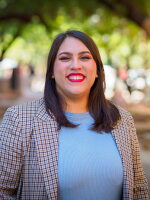
Former state house representative Daniel Hernandez leads the Democratic candidates with nearly $1 million raised, according to the latest Federal Election Commission report. Behind him is Adelita Grijalva–the daughter of the late Southern Arizona Congressman Raúl Grijalva–with $835,000 and 25-year-old Deja Foxx at just over $600,000.
Unlike Hernandez, 36.9% of Grijalva’s and 74.5% Foxx’s donations came from unitemized individual contributions–donations that are less than $200.
The FEC does not require candidates to disclose small-dollar donor information. But, AZPM News requested that each Democratic candidate share that information. None responded.
Most of Foxx’s itemized individual contributions came from out of state, with only 16% from Arizona. That is in contrast to Hernandez’s and Grijalva’s contributors, who were mainly from the state. AZPM News asked Foxx’s campaign for comment about the vast majority of itemized individual contributions–donations larger than $200–coming from out of state rather than constituents in the district. She did not respond to requests for comment.
Some of Grijalva’s biggest political action committee donors were:
- Progressive Voters of America
- Emily’s List, a group that funds pro-abortion candidates
- The Jane Fonda Climate PAC
- Gabrielle Gifford’s PAC, which supports candidates who advocate for gun safety measures
Foxx received PAC/group donations from:
- ASPIRE PAC, a political arm that supports electing Asian American and Pacific Islander members to Congress
- The Juno Fund, which works to elect women into political spaces
- Change 4 Nogales
Hernandez received the most PAC/group funding out of all the Democratic candidates. Some of those donors were:
- DMFI PAC, which supports candidates who are pro-Israel
- UNS Energy Corporation PAC, an extension of Tucson Electric Power
- Southwest Gas Corporation PAC
- Equality PAC, an arm of the Congressional LGBTQ Equality Caucus
Another Democratic candidate running is Patrick Harris Sr. He is best known for his “Capitated Capitalism” initiative, which would create a 100% tax on assets that are greater than $1 billion, targeting the country’s wealthiest. He ran what he calls a zero-budget campaign, meaning he did not accept donations or endorsements.
“Name recognition, who you know–aka 'endorsements’–and how much money you spend are irrefutably the keys to getting elected,” Harris told AZPM News. “If I lose, CapTheCap doesn’t die, but it sends a message about how far adrift we are from what our founders wanted. If I win, it sends a message that some random guy, out of district, without any money or endorsements, won against all odds.”
The last Democratic candidate is Jose Malvido Jr., who did not report any campaign spending or raising to the FEC. Campaigns that utilize less than $5,000 do not have to report. AZPM asked Malvido for campaign finance data. He did not respond.

Daniel Butierez, who ran for the seat in 2024 against the late congressman, is leading the Republican primary with nearly $180,000 raised. Jorge Rivas follows with nearly $12,000. Different from some Democratic candidates, neither Rivas nor Buteriez took contributions from political action committees or groups.
Jimmy Rodriguez, the final Republican candidate, did not report campaign dollars to the FEC, similar to Harris and Malvido. In his FEC filing, which states why he did not spend more than $5,000, he wrote that “big money has no place in campaigns meant to serve the people.”
“My campaign runs on a grassroots budget, powered by the support of everyday Arizonans in Yuma, Tucson, and beyond,” Rodriguez wrote.
Final campaign finance reports will be submitted to the FEC following the election.