It’s a position that requires attendance at hours-long public meetings.
It demands knowledge of the ins and outs of district policies.
For some, it can feel like a full-time job — except it’s completely unpaid.
But the role of a school district governing board member is essential to carrying out the vision of the students, parents, employees — and ultimately the voters — who reside in those districts.
Amy Krauss is an outgoing board member for the Catalina Foothills School District. She said school board races see some of the lowest voter turnout.
“School board elections, because they tend to be at the bottom of the ballot, are sometimes overlooked, and that's really unfortunate,” Krauss said.

Hundreds of thousands of potential votes for school boards in Pima County went to waste in 2024, due to voters skipping those races or selecting fewer candidates than the number indicated on their ballot.
In the Tucson Unified School District, more than 250,000 potential votes — called “undervotes” — were never cast that year. About 900 other votes that were cast didn’t count because voters had selected more than the three candidates they were instructed to choose. Those are known as “overvotes.”
A poll from the Center for the Future of Arizona shows that 90% of likely voters agree the state’s future depends on a strong public education system. And only 10% of likely voters say the state’s K-12 public school system is “very good” or “excellent.”
What do school boards do?
School board elections happen every two years. Terms are either two or four years long. To be eligible for candidacy, residents must be at least 18 years old and must have lived in the district they’re running in for at least one year prior to Election Day.
In order to qualify for the ballot, candidates are required to collect signatures from half a percent of their registered voter pool.
Amy Krauss has served on the Foothills board for 12 years. She oversees seven schools, 5,000 students and 24,000 registered voters. She said the gig carries a lot of responsibilities.
Namely, members are tasked with approving a budget; maintaining the district’s academic and community goals; establishing and amending policies; and using educators’ expertise to make those decisions.
One thing Krauss emphasized is that it’s not a position driven by politics.
“It shouldn’t be a stepping stone to another public office. I wouldn’t want to see a board member sitting in that seat for some personal gain,” she said.
School boards are also charged with appointing superintendents who are in a district’s highest administrative position and often make recommendations to board members for their approval.
Dustin Williams is Pima County’s superintendent of public schools. He’s been in that elected role for a decade now, overseeing 18 districts.

He said his role, as well as that of a district superintendent’s and a board member’s, is student-driven.
“Sometimes it’s that teacher or that counselor or even that cafeteria worker or bus driver that is that one person in the school that maybe made the day a little bit brighter for that student,” he said. “When you look at governing board members, they’re also the leaders of those actual districts.”
Williams said Pima County schools are facing limited funding, chronic absenteeism and most are seeing declining enrollment. Whoever is elected to the school boards will have to take those issues on.
The superintendent added that while politics can creep into school board discussions and decisions, they shouldn’t.
“Students pick up on everything that adults say. So they can read a room just like an adult can,” Williams said. Sometimes it's better to refrain from political moments and try to keep that out of the school system and really just focus on what's best for the child.”
A candidate’s perspective
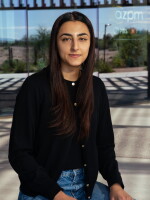
Throughout her campaign running for the Amphitheater Unified School District board this season, Elizabeth Slater said she often encountered residents who misunderstand the role of school boards.
She said many don’t realize candidates run on a non-partisan platform.
“And a lot of people don’t really know why they should care. A lot of folks I talked to didn't have kids,” Slater said. “I had one gentleman even say, ‘I don’t have a dog in that fight.’”

As the current CEO of Youth On Their Own, a local nonprofit that supports unhoused youth and promotes high school graduation, Slater said she sees “a million reasons” to have a better-educated population. But electing school board members will also have economic impacts.
“If people want to know why they should personally care, I think they should look at things like: Do they own property in the district? Their property value — is it directly related to the quality of our school district? That’s top thing. And then secondly, that workers will come out of our schools,” she said.
Slater said she plans to bring her understanding of high-level management from her experience with Youth On Their Own to the Amphi board, and listen to family needs following the recent closure of four district elementary schools.
“We just learned a lot of lessons about how we could approach that differently or offer some different opportunities for engagement from the community next time so that folks do feel like they were heard,” she said, of the school closure process.
Since the role is non-partisan, Slater is running an endorsement-free campaign so to try and reach more voters, she said she’s knocking on doors, posting signage and doing outreach on social media.
Governing board elections will occur in Amphitheater, Pima JTED, Tanque Verde, Tucson Unified, Sunnyside and Sahuarita school districts this year. Candidates in the rest of Pima County’s districts are uncontested.
Voters can refer to candidate bios and statements of interest for more information.