

Arizona Science
New episodes each Friday
From astronomy to cancer research and beyond, explore the latest scientific and technological innovations taking place in Arizona.
Ways To Subscribe


Recent Episodes
-
 Arizona water researchers came out with a major study on boosting groundwater supplies.
-
 Scientists are researching the smallest tools for advanced electronics. University of Arizona Materials Science professor Zafer Mutlu works with objects too small to be seen with the naked eye or even standardized microscopes. He describes how nano technology can make electronics stronger under extreme conditions. Zafer Mutlu spoke with Erika Hamden, professor of astrophysics at the University of Arizona.
-
 A drug called Rapamycin impacts the immune system to help organ transplant patients accept foreign tissue. University of Arizona pharmacy professor Bonnie LaFleur says researchers have discovered it can also be useful as an anti-aging drug. Bonnie LaFleur spoke with Tim Swindle, professor emeritus of Planetary Science at the University of Arizona.
-
 Radio astronomers search the sky for sources sending out invisible light, including black holes and exploding stars. University of Arizona researcher Kate Alexander investigates locations known to emit radio light, and links her findings with other types of light on the electromagnetic spectrum. Kate Alexander spoke with Tim Swindle, professor emeritus of Planetary Science at the University of Arizona.
-
 Plant scientists are discovering the original variant of popular crops might bring a higher quality of produce. University of Arizona professor Alonso Favela explains why returning to the past could be necessary for advancing sustainable agriculture. Alonso Favela spoke with Tim Swindle, professor emeritus of Planetary Science at the University of Arizona.
-
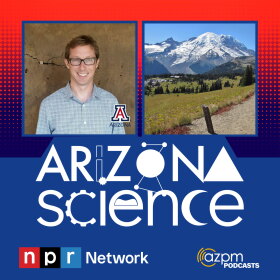 Evidence found in tree rings has uncovered massive mudflows that shaped the Pacific Northwest 500 years ago. University of Arizona researcher Bryan Black discusses how seismic activity that rocked Mount Rainier in the 16th century turned the landscape into what we see today. Bryan Black spoke with Tim Swindle, professor emeritus of Planetary Science at the University of Arizona.
-
The latest in a series of outer space observatories is sending back images and data from Earth orbit. University of Arizona planetary scientist Daniel Apai discusses the new Pandora Space Telescope, and what it is expected to tell astronomers about exoplanets and their atmospheres. Daniel Apai spoke with Tim Swindle, professor emeritus of Planetary Science at the University of Arizona.
-
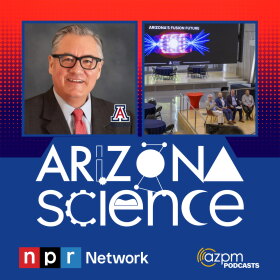 Nuclear fusion holds the promise of solving the world's energy challenges. University of Arizona researcher Tomas Diaz de la Rubia discusses the latest breakthroughs in developing nuclear fusion and how it has advantages over currently-operating nuclear power plants.Tomas Diaz de la Rubia spoke with Tim Swindle, professor emeritus of Planetary Science at the University of Arizona.
-
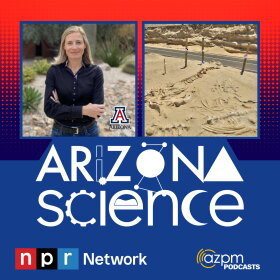 Scientists have spent decades studying whale fossils found on land near the Chile's Pacific coast. University of Arizona Geosciences professor Barbara Carrapa discusses how volcanic activity in the Andes Mountains actually led to the demise of the whales seven million years ago. Barbara Carrapa spoke with Erika Hamden, professor of Astrophysics at the University of Arizona.
-
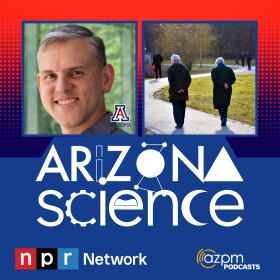 Evolution plays a role in why some species have more longevity than others. University of Arizona molecular scientist George Sutphin discusses how the process of aging produces what is naturally best for animals ranging from sharks to humans.George Sutphin spoke with Erika Hamden, astrophysicist at the University of Arizona.


Arizona Science is proudly supported by the Research Corporation for Science Advancement.