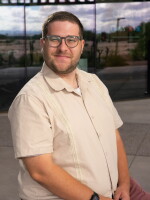
On Tuesday, U.S. Sen. Ruben Gallego paid a visit to Graham County’s only hospital – one of four stops on the Arizona Democrat’s first trip to the area as a senator.
Cancer patients at Mt. Graham Regional Medical Center were once treated by a visiting oncology group from Tucson.
But Arizona Blood and Cancer notified the hospital in March 2025 that in about two months, it would no longer serve patients in Safford.
Pima Heart made a similar announcement affecting cardiac patients in the area. Together, the departures affected about 1,600 patients, according to Mt. Graham Regional Medical Center CEO and general surgeon Dr. Bart Carter.
Carter recalled an elderly man who was wheeled into his office by his daughter after being diagnosed with cancer. Carter said the man's nearest option for chemotherapy was in Tucson, about two hours away.
“We’re on the medical frontier. We’re two or three hours from a major center,” Carter said.
Carter said the man could not afford or physically manage regular trips to Tucson for treatment. “He simply said, ‘I guess I can go to Tucson once, and then I guess I just will choose to die,’” Carter said.
Gallego said that while he believes in capitalism, there needs to be a "structured and responsible way out" when healthcare companies leave rural markets.
But the loss of specialty providers is not the only financial challenge facing the hospital.
Carter said the hospital faces a significant drop in federal funding by 2031, attributing the projected decline to changes in federal healthcare policy and the expiration of temporary funding programs.
The hospital is also preparing for changes to Medicaid under the federal tax and spending law signed by President Donald Trump in July 2025.
The law, known as H.R. 1 during congressional debate and colloquially as the "One Big Beautiful Bill Act," makes several changes to Medicaid, including new work requirements for some adults and restrictions on how states finance their programs. The Congressional Budget Office has projected the changes will reduce federal Medicaid spending by hundreds of billions of dollars over the next decade.
"Medicaid expansion was a very personal baby of mine. I'm still extremely ... dedicated to protecting it," Gallego said. "I can't believe I'm still fighting 13 years later."
Gallego has opposed the Medicaid provisions in the Republican-backed law.
The same law created the $50 billion Rural Health Transformation Program, which is intended to support rural health systems as states implement changes to Medicaid and other federal health policies.
Arizona received nearly $167 million for the program's first year. The Arizona Health Care Cost Containment System is administering the state's share, which can be used for projects including expanding access to care, strengthening the rural health workforce and modernizing rural health systems.
Carter said the program may not adequately address the immediate financial needs of small rural hospitals.
He said smaller providers must compete with universities and larger institutions for funding, including for workforce development projects, while rural hospitals also need money for daily operations. Carter said smaller hospitals often lack the grant writers and government-relations staff available to larger institutions.
"I think we're going to have a game plan pretty quickly after the campaign season is over to try to bring some of the Medicaid cuts back," Gallego said.
Gallego’s listening tour also covers agriculture, education, public safety

Earlier that morning, Gallego met with farmers and ranchers at Eastern Arizona College to discuss urgent challenges shaping Arizona’s agriculture, the ongoing Colorado River negotiations and workforce shortages tied to immigration enforcement.
Greenlee County rancher Suzanne Menges spoke about the 1980 Equal Access to Justice Act, which allows individuals to recover fees and litigation costs when they win a civil suit. She asked Gallego to revisit the act, as lawsuits toward farmers are being abused.
“It seems that ranchers and agriculture are being targeted, especially by groups that don't want livestock out on the land,” she said.
Gallego was receptive to revisiting the act and diminishing litigation brought on toward farmers. He said he wants to bridge the communication between both parties. He said many U.S. politicians don’t understand the agricultural layout of southern Arizona.
“We have a lot of interaction between the federal government and these ranchers. There needs to be a better relationship and the federal government needs to be more responsive,” he told AZPM.
Gallego also visited the Safford Fire Department and met with its volunteer firefighters, where they discussed recruitment and retention, emergency response needs, equipment and staffing, and the federal resources available to support rural public safety.
Gallego also addressed an auditorium of educators at Eastern Arizona College, sharing his family’s educational story and emphasizing the importance of investing in rural America.
“There is a true story of America right there that we need to continue to invest in,” Gallego said. “When it comes to rural America that is even a bigger problem.”