Arizonans aren’t the only people paying attention to the state’s election results.
Thousands of miles away from the United States, journalists in Germany are closely following the political shifts taking place in Arizona, where Latino voters could play an important role in the upcoming midterm elections.
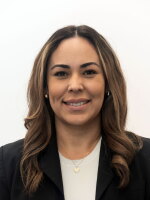
Nina Barth, a journalist with ARD Studio, a German news organization based in Washington, D.C., first visited Arizona in 2024 to report on Latino voters ahead of the presidential election. She returned to Tucson earlier in October to find out how their views may have changed ahead of the midterms.
Barth says immigration enforcement and President Donald Trump’s support among Latino voters have become important topics of discussion in Germany.
“A lot of people in Germany are asking themselves, how is it possible that Donald Trump has so much support from Latino voters,” Barth said. “Because he did have a lot of support in 2024. And now the polls suggest that this support is not going to be that big anymore.”
During two days of interviews in Tucson, Barth said she encountered more undecided and disappointed voters than she expected. Some told her they were considering not voting for either party.
“They said, you know, I’m really kind of frustrated with the Republicans because of Trump, but I’m also not convinced by the Democrats,” Barth said. “So I will likely stay at home.”
Economic concerns were also a recurring theme in those conversations.
According to the Pew Research Center, approval of Trump among Latino voters who supported him in 2024 has declined significantly since the beginning of his second term. Barth said the rising cost of living is one factor contributing to that frustration.
“Some people said, you know, ‘I’m struggling.’ Like, I’m buying food for my family, and then the money’s gone for the rest of the month,” she said.
Max Hermes, a reporter with Welt TV in Berlin who also recently visited Tucson, said German audiences are interested in understanding why Trump gained support among Latino voters and how his policies are affecting people beyond the United States.
Hermes pointed to rising gasoline prices in Germany – related to the ongoing war in Iran – which he said have become a growing concern for people who depend on their cars to get to work.
“We have an increase in gas prices in Germany. It’s a huge thing for everyone who has a car and who drives by car to his work or who is dependent on the car,” Hermes said. “Many people are dependent on their car, and they now feel it’s getting more expensive and more expensive. And, yeah, that’s really annoying the people.”
For southern Arizona residents, international interest in Latino voters is not surprising.
Jaime Chamberlain, owner of Chamberlain Distributing in Nogales, said the political influence of Latino voters has drawn attention nationwide, particularly after the community’s support for Trump increased during the 2024 election.
“Whether it’s because the current administration is extremely polarizing or because of the comments that are made by the president specifically, I think there’s a tremendous interest all over the United States,” Chamberlain said. “And absolutely within the Latino voter section, because in the last election cycle, the Latino voters really made an impact and a difference in the vote and voted more conservatively, a little bit right of center.”
Chamberlain said Southern Arizona is a natural place for international journalists to look for answers, given the region’s large Hispanic and Latino population.
According to the U.S. Census Bureau, approximately 37% of Pima County residents identify as Hispanic or Latino.
He expects the community’s political influence to grow as its population and economic presence expand.
“I just think that the Hispanic vote overall is going to become more and more important as the years progress and as the population increases,” Chamberlain said. “And the Hispanic vote is also becoming more important just because Hispanic entrepreneurs are becoming more and more financially stable and coming into a different sector with different issues than they had in the past.”
As the midterm elections approach, the conversations taking place in Southern Arizona are becoming part of a much larger international story.
For journalists in Germany, understanding Latino voters here offers a window into the political and economic forces shaping the United States — and the consequences those changes may have abroad.