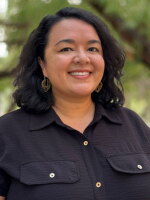
Arizona Treasurer Kimberly Yee joins hosts Nicole Cox and Linda O'Bryon for this special Financial Literacy Month episode. Treasurer Yee discusses the state’s 529 Education Savings Plan, which helps Arizonans save for a number of educational opportunities, as well as the work her administration has done to bolster financial education.
Nicole Cox: With the average cost of college in the United States hovering around $38,000 per student per year, according to the Education Data Initiative—that includes books, supplies and daily living expenses—saving up for college can seem like a daunting endeavor. I'm Nicole Cox.
Linda O’Bryon: And I'm Linda O'Bryon. Thank you for joining us for Navigating Our Financial Times. Even though, thanks to financial aid and merit aid, families aren't always paying those high prices, just knowing that the cost of college has more than doubled in the twenty first century might be enough to make parents and grandparents think, well, it's time to start saving for college.
NC: One way people can save is with a 529 plan. It's a college savings plan operated by a state or educational institution. It has flexibility and certain tax advantages that can make it easier to save for college, trade school, vocational school, and even K-12 tuition for public, private or a religious school.
LO: And with April being National Financial Literacy Month, it is a good time to review what 529 plans can do and discuss some myths that might prevent someone from investigating them further. . Joining us today is Arizona's chief banking and investment officer, State Treasurer Kimberly Yee, to share some information about 529 plans. Welcome to the program, Treasurer.
Treasurer Kimberly Yee: Thank you. It's a pleasure to be with you today.
NC: Well, according to the Education Data Initiative, 35% of families use a college savings fund. Treasurer Yee, how does Arizona compare to other states when it comes to families who have a 529?
TKY: Yes. Well, Arizona, like many other states in the country, has a 529 plan. And it is specific to our state because each unique state has different tax-related incentives. And as ours is the Arizona 529, was called the college Savings Plan for roughly 25 years. But as I was approaching my work as state treasurer, I saw that many other states were managing the 529 through their treasurer's office. In Arizona, it was unique because it was being managed for 25+ years in a tiny, bureaucratic little office. It was the Post-Secondary Education Commission. No parent, new parent or grandparent would look to Google “Post-Secondary Education Commission Office” to find a 529. So I knew that there was a lot of work to be done to really advance the awareness of what the 529s were here in Arizona.
But the first thing I wanted to do was change the name because as you mentioned earlier, many of these 529s across the country are called college savings plans. But we know that higher education is much more than college, and should be recognized as such. So I changed the name from Arizona College Savings Plan to Arizona's 529 Education Savings Plan, because education can be more general, in terms of looking at vocational education in the trades, workforce training, apprenticeship programs beyond college as well as university work. And so by renaming the program itself, I wanted to rebrand it in a way to families that are not just the parents who are always the ones who were opening these accounts, but to grandparents, to aunts, to uncles, to those who are even looking at opening a 529 for themselves.
And when we were in the middle of Covid, we were doing this, we actually changed the law, moved it over to be administered by the Treasury, which is under my administration from that tiny bureaucratic office. We changed the name and took out the word ‘college.’ We made it more general, but I really wanted to bring this to the families who have never thought about going to college before. And that meant a whole rebrand of what we talk about and how we share the words. Because money is a very, you know, intimidating subject for some families who don't regularly save. So we wanted to rebrand with pictures, social media bringing the language to that individual. So we actually translated documents to Spanish and to Navajo here in Arizona. And ensuring that our marketing showed that if you want to start a savings plan with a 529 at $15 a month, this plan is for you as well. And, and really that rebrand has allowed us to engage so many new families in Arizona.
I just want to share with you that in 64 short months under the Arizona Treasurer's office, the 529 plan in Arizona has grown to over 67,588 new accounts. And that has been with great effort to really move this beyond the traditional family that invests. It's to the family who doesn't invest, who doesn't regularly save, who doesn't think about college beyond high school. Those are the people who we wanted to reach. And we have. And that's the good news. We have also been recognized nationally by Forbes as one of the top 529s in the country now. And we've advanced even our website not only to az529.gov, but we have an az529.gov en Español. And so, this has been so wonderful to see in its growth.
And I just want to take the time for families across the country who haven't thought about putting money aside, no matter what that amount looks like, to look at 529 plans as an option beyond your traditional savings, because this not only grows with time, but you can have multiple beneficiaries, you know, on a 529 plan and get tax deductions for each one of those beneficiaries, depending on your state.
LO: When you say tax deductions though, are you talking about state deductions for state income tax, not federal?
TKY: Exactly. So every state has its unique plan. Most 529s are within, you know, the country. And every state has its unique tax benefits. And in Arizona, we're very generous. So a family, for instance, a single filer can deduct up to $2,000 for one beneficiary on a 529. But we have no caps. You can have multiple children who are 529 recipients and get that $2,000 for a single filer. If you're a married couple, it's $4,000. Again, no max here in Arizona. You can have multiple grandchildren or children on these and get the tax deduction. It doesn't have to just be parents. It could be grandparents, could be aunts, uncles, anybody who wants to contribute to a 529.
NC: And can we also can we also clarify that yes, Arizona does allow the contributions to the 529 to be taken off? Not all states allow that, but that amount is not how much you're limited to for contributions every year. Correct?
TKY: That's right. And exactly right. So you can go beyond that amount. That's just you’re your max limit for the deduction. And Arizona accepts, among that 67,588 new accounts, those are not just Arizona residents opening an AZ 529. It is multiple families from different parts of the country saying Arizona's 529 plan and how we run it and the types of, you know, investment managers that we use, that's who they want to be with.
And the 529 itself, those funds can be moved to any state in the country when your child is ready to go to that institution. It obviously has to be an accredited institution across the country, but it certainly is not limited to the state in which you live.
LO: And that's a big factor, because I was involved and engaged in one of the original prepaid programs, actually in Florida where I reside. But with that, you really, the funds needed to go to a Florida public college. You would still keep the funds, but in order for them to really have the benefit, it would be in that state. So what is really good about 529 plans, and especially as you've defined it, is that it's much broader than one particular state.
TKY: It is. And that's why we see in so many of these other 529 plans, they have their unique brand, right? For us in Arizona, we have Goldman Sachs and we have Fidelity as our partners that we use in Arizona. And another state will have different partners. So it really is about the family and their needs.
For instance, we have we always encourage new investors who have never done this before to do a very conservative investment. Those who are more sophisticated can go and do other things, but it does customize to your unique needs of your family and, and the comfort level that you have on investing as well. But we have seen such great growth and it really has for me been very surprising that these are not just Arizona, 529 families. They are from across the country, having an AZ 529 as their chosen savings plan.
LO: Well, talk about the investments. When you say you're working with Goldman Sachs and Fidelity, what sort of investment would the recipient would the recipient have, or the investor?
TKY: Well, they manage at their own firm. So the individual family investor will be able to work directly with them on their unique needs, maybe change up timelines and things where you're going to go a little full force during this child's period of time, maybe in elementary school, but rank that back up a little bit in, in a more aggressive way before they actually pull that money out before, um, they exit high school. Every family is uniquely different, but that's why we love working with our partners, because they do have the capability and flexibility to work with families on their unique needs.
LO: But these are in mutual funds, not individual stocks. Is that correct?
TKY: Well, we have different portfolios. And so our advisor sole plan as well as our direct sold plan. All of that can be customized based on the family's need.
LO: Treasurer Yee, there are those people who are worried about the stock market and the volatility that we've seen, especially in recent years. What do you tell them that, they're investing their hard-earned dollars into something that will be invested in the stock market, whether it's a mutual fund or some other vehicle?
TKY: Well, I always share with families that when you're putting money into a 529, there is a great level of safety because keep in mind that we have such a huge volume of families that we are working with that you're not going to have higher risk. Because it is a state sponsored program as well, you have a great level of safety involved in these types of offerings. So in comparison to say, doing this on your own or, you know, having another private entity do this, a state-sponsored 529 plan does build in what I consider safety first. And my personal investment philosophy here at the Arizona Treasurer's office is safety before liquidity, before yield. And so keeping that in mind, you're always looking out for the bottom number. But at the same time, you're looking for the safety of the fund. Otherwise there's really no need for that individual to continue to keep their money in that fund for such a long period of time. But taking a look at each individual, you know, group that you're working with, whether it is in this case, Fidelity or Goldman Sachs, you can take a look at where their current holdings are, as well as how other families have done the work over time in the trends. And there are different ways, comfort level that a family can choose. Some choose to customize very regularly, while others just kind of keep a steady stream and use the advice of that professional portfolio manager at that company because they are the ones who are managing it from a day to day. So I always just say, you know, we have offerings for that reason and I personally feel that the longer you keep your money in, you know, it's safe. You don't touch it. You just keep putting the money in.
I have a solution, by the way, for people who do have some—I always got asked the question early on when I was administering the program, which was, ‘how much money do I put in?’ Because they don't know what the future of their child will hold. And maybe they go to college, maybe they go to trade school, or maybe they don't use all of the money that's in the fund. We have an answer today. The federal government took a look at this very question and they actually allowed for $35,000 to be transferred and rolled over to a Roth IRA if it's unused from a 529 plan. So that's really good news for families who always wondered, ‘what if I put too much in?’ because everyone can use a Roth IRA from their 529 plan to just be able to be transferred over. Again, it's a $35,000 limit, but that's a significant amount of money that you can transfer and roll over. There's always been the option that you can transfer a beneficiary to a different name in the family. So you have sibling one, they have money left over. Let's say it's $10,000, and you have sibling two. You can always transfer the name of your account to sibling number two. That's always been in place. Now you can actually just keep it in the same name, but transfer it over to a Roth IRA.
NC: Well, and that's a great point. I'd like to actually clarify a couple of things about that and loop back to something else you said, which is wonderful that you've expanded this to vocational. Let's say you want to get a certification first and then consider college or vice versa, right? Or maybe you get, you get educated in a trade and then you take a break. You don't have to do anything with that money necessarily. Can we talk a little bit about, um, the difference? You mentioned this could be transferred up to $35,000 to a Roth IRA. These are after-tax dollars that contribute to your 529. So even though some employers may offer a payroll deduction—so let's talk a little bit about that and how. Yes, there is a difference. You can put it in a Roth, maybe someone with a long-time horizon that would be more beneficial for someone than, say, would look at a traditional. Go ahead and clarify about that if you could.
TKY: Yes, it really is. It's so new that we are just seeing what people are doing with it. And many families for so many years just kind of left it in the account. And you know, we don't want it to just be forgotten or unclaimed property at some point, you know, we want the families to be able to use this money and maximize it. If they didn't know that they could transfer the name of that account to a family member, we need to give that information; and we do, in our az529.gov website.
But now the rollover, the Roth rollover is so significant because there are going to be families who can, you know, again, they have to be families who have been in 529 for at least 15 years. You can't just start an account and then roll it over. So there are accountability measures built into this federal law, which is a good thing, but this does allow for that family and it doesn't have to be immediately right, because maybe there is a five-year gap from high school to their higher education, then they realize, ‘I have $15,000 here.’ They could keep it in that 529 for as long as they want, but they will always know that if they're seeing there's no use for it in a higher education institution of whatever that looks like, that can be moved at any point in time to that Roth IRA in the beneficiary's name.
Now, you can't change it into a different name of a family member. It has to keep to the name of the 529 holder, if that makes sense. And then, the other thing I always share is, is that we do encourage for individuals who are, let's just say, they are a young professional, they are starting their jobs for the first time. They have new money in the bank, right? And, and rather than, say, putting it in a traditional savings plan at their local bank, I always encourage them to start a 529 in their own name. Now, they may have already gone through grad school, they're done with their education, but they as an individual can open a 529, start saving, creating that interest over time and their first child maybe in five or 10 years, you can transfer the name of your own individual account to your family member. That's always been in the law, and that family member may not be born yet, but in the future.
NC: That’s true.
TKY: That is a legitimate account holder that you can transfer as a family member. And all the while you've been collecting interest to benefit that account.
LO: And collecting interest without taxes.
TKY: Exactly.
LO: I think that's an important part. You don't get the tax advantage at the beginning, but the whole time that it's in that account, it's basically like an IRA.
TKY: Exactly. And that's most people don't know that you can do that. So I have, you know, with this, this plan, the 529 in Arizona, I've added so much more information not only to, again, your traditional parents who were the ones who opened up these accounts for so many years. But to grandparents, because at least in Arizona, a parent and a grandparent can be contributors of that child's account and get the tax deduction. It's not limited to one or the other. But then for those young professionals who want in on that tax deduction, I'm always saying just open your own account. You may or may not go to grad school or even a continuing education or whatever it is in the future. But you may have, you know, someone you can be able to share that account with; maybe a future child. So it's good news all around.
LO: And what are some of those other uses? You mentioned vocational, but even if someone is a working professional and they want to go back for some sort of continuing education, would it qualify for that?
TKY: Yes. Well, the new rules did allow for more expansion of what that looks like. And we certainly have seen post-Covid people change courses of their industry and they're going back to school. We call it, you know, industry changes, um, that have really allowed for families and for individuals to say, ‘You know what? I've done this my whole life. Now I want to go back to school and do something else.’ And so there are adults who are now opening their own accounts. Their spouses are their contributors. And they can get the tax deduction. So it is a very flexible way of saving. And everybody needs higher education, right? And that looks different to different people. It doesn't have to be a community college or a university, but workforce trades are needed in so many of our growing states.
NC: You mentioned obviously the numbers look very good for the amount of people that have an AZ 529 plan. What are some of the myths you're encountering that could prevent people from looking into this?
TKY: I hear a lot of myths in that, ‘Oh, well, if I open a 529, I won't get financial aid for my child.’ And that's, you know, it's been around for years and years and that's not necessarily the case because in a 529 situation, you're holding this account for many years, assuming that you started it, you know, a child's birth and, and it isn't, um, changing your income levels and other things that they're looking at for, say, financial aid-related needs. Um, so that's just something that has been a myth on the books. For the most part, it really only is a benefit for you to, to start a 529 plan, even if you are taking a look at other financial aid-related options for your child's future.
Another myth has always been, ‘You know what? If my child doesn't go to college, maybe my child doesn't go to higher ed. Will that be a waste?’ And the answer is no, and I shared that today. One, there has always been the opportunity to move the account holder's name. So the person who you thought was going to go to college, um, doesn't go to college. Maybe they have a sibling. That sibling can be named for that account. And again, that is something that's always been on the books, but even better, we have the Roth IRA rollover now. And again, while the max is $35,000, that's a significant amount of money for any family to take a look at just rolling that over to a retirement fund with a Roth IRA. So those are a lot of myths that have been debunked.
Oh, the other one that I always hear is, ‘Oh, I have to stay within my state for these funds.’ So that means the higher education has to stay within the state in which you have your 529 or where you reside. Not the case at all. You can go anywhere in the United States. Any type of higher education institution. We've talked about how many there are out there as long as it's accredited. And so once you have that, you're good to go anywhere in the country.
NC: And I suppose it's worth clarifying: One of the advantages to rolling over to a Roth IRA through a financial institution would be you'd have more control over how you want those assets to be handled?
TKY: Right. And there's lots of reasons why I believe it's been asked for, you know, because there may be families again, who, um, always put less in that 529 because they were unsure of where the money would go if that child didn't use it in their future. And that's a legitimate reason to put less in, But this allows for a family to really, you know, have that freedom to put as much money as is comfortable, obviously, in a 529 and grow it over time, and then have whatever might be left over to be transferred to a Roth IRA.
LO: And what about when the child is born? Is that the best time to start?
TKY: I always say, yes. May 29th is approaching quickly and that is what we call 529 day, May 29. Do you get it? [laughter]
NC: Very cute. Yes.
TKY: And so on May 29, which we call 529 day, I have such a pleasure of being able to see who is the first child born in Arizona? And I go and surprise the family in a hospital room with a 529 plan for that newborn baby. It's amazing. And I see tears of joy on, you know, the family's faces when we literally come in with a big surprise—balloons and all, onesie with a 529 logo on it, and we literally have $529 dollars ready to go into their child's 529 account.
NC: That is adorable.
TKY: It's so exciting and we have done this for a couple of years. I always just say, I have to pray that a child will be born on May 29 so that we can do this once again this year. So it's really wonderful to really celebrate this as a thing that you do when your child is born. And I know, you know, as a new mom, there's lots of things you're thinking about, but what we have done from a marketing standpoint is to not wait until that moment to really talk about this to younger groups, you know, those who are what I consider just out of college, they are getting, you know, into their first jobs. They're earning their money for the first time young professionals. So that they're ready to go once their child is born and understand the importance of something like this. We also hold baby showers, believe it or not. So pregnant moms, whether they're, um, English is their first language or not. We actually hold baby showers for expectant moms. And you know, I've gone in even with a translator in some of our communities in Arizona where we're talking about, how are you preparing a savings plan for that baby who will be born in a few months? And that prepares them so that it's not a scary topic that they have to research about once the baby is already born and they're juggling so many things, but in advance of that. And to give them the materials they need to be ready to go on day one.
I will share with you an interesting story is that when my babies were born, I was so quick to start a savings plan, that they said, you're too early because you don't even have their social security number in the mail yet.
NC: You can do it though. You can still do that. You can, you can open it up without having a social, without them being born.
TKY: Amazing.
NC: I did
TKY: Well, my local person said no, but I waited just about, you know, five to seven days or so. And it came. But it was interesting to see that there are some of us, you know, who think through this early on, and then there are others who, this is something this would never even be on, you know, their mind. So our job as a state, it's a state-sponsored program: We want to get this out in an easy-to-understand fashion, especially to busy moms out there. To understand this is part of your family planning. And when you are creating, you know, that wonderful pathway to your child's success, it can look like many different options. It could be a college, it could be a university, maybe it's a workforce training program or an apprenticeship program. All of those things have great value, but we have to prepare a savings plan for your child to get there.
NC: I will say I was pregnant with my son when I opened his 529, and it was a while ago, so I don't remember how I did it, and maybe it was that I had to open it up and then transfer it to him once I got the Social Security number.
TKY: Maybe that was it.
NC: So of course, check with your financial advisor, check with your financial institution because things might have changed. This was a while ago, but, um, yeah, it's never too early to start. Especially like you said, when you have the baby, you're so busy. That might not be top of mind, right?
TKY: Exactly. And one of the things we do share, even, with not just families, because we're talking about adults here, but children. So I love going into our classrooms and talking with children even as early as kindergarten about savings and really what that means to them as even that five-year-old. Um, and the value of working and earning your money because early on, they may not understand the big, you know, complicated concepts of money, but they understand what it means to them. And so we talk about doing chores and working for that effort because the money that they get by doing the chore and being paid for it is of value. And so the money in their pocket then can be decided upon whether you save the money, you spend it. And I always say, spend it wisely. But beyond that, you can be a good steward of your money by sharing it and giving that to, you know, a nonprofit or a group that is in need. And that's a concept that maybe isn't always covered to a young child, but it's probably the hardest one to understand because you want to keep your own money. And so those are some of the things we talk about in our schools on our effort to just kind of create an easy-to-understand but engaging format.
So back to the 529s: We actually have art contests for kids in the spring and we ask them to draw their future dream job. And when they draw their future dream job, we are starting to talk about what a 529 plan looks like. When they win, and we always have a, you know, winner from all counties in Arizona, all types of schools—whether they are a homeschooler to a district public school, to a private school, to a tribal school and a charter school—we engage children and we literally had over 900 entries. And it was amazing, 900 families to be able to apply for $529 for their child's account. And it was so amazing. They get a big check, like sort of the sweepstakes check. And it's so much fun. In the fall, we do an essay contest. Very simple essay contest to ask them, what do you want to do when you grow up? What will it take to get there and how will you save for it? This not only engages the child, but their families, to sit at the table to apply for this $529. Oftentimes we're opening new accounts for new families for the very first time, but to see the looks on their faces when they get that money here at the State Capitol is really priceless. And again, it's a fun and engaging way to bring young people into this conversation.
LO: Well, if a family wants to get involved with a 529 and let's say the child is older now. Certainly, I'm sure you encourage it at any age.
TKY: At any age.
LO: But how do they get involved and what limits does an individual have in terms of what kinds of contributions they can make?
TKY: To me, it's never too late. I always say it's never too early. It's certainly never too late to start a savings plan. And even if you are an adult and you're starting a plan for yourself, this is something you could use for your own higher education and learning. It could also, let's just say, you transfer it to a family member after starting it and, and that could be at any age. We always love to share with our grandparents, for instance, that this is a gift, a legacy gift that you are creating for a grandchild. And especially during the holidays, we love to share. This is a very uniquely special gift when you give the gift of savings. And the money that you would otherwise buy in a present, you know, to put in gift wrap, sure, you can do those, but how meaningful would those be if you compare it to the gift of savings and putting money into a 529 plan, that really does last a lifetime, and it's going to grow with interest while you are continuing to give that gift.
And again, we share all of these ideas on our 529 website. Many other states have asked Arizona to share what we have done in this very short period of time, roughly 40 months or so that we've been administering this. Um, and to be able to get the results that we have means that we can do more in other states to be able to really advance the messaging of what 529s are. They've been around a long time, but not a lot of people know about them.
LO: And just to acknowledge that there is a limit in terms of how much one person can contribute to one other person per year based on gift taxes?
TKY: Well, there is for every state, a limit. So for us in Arizona, every year we determine what the limit is. It does change over time. So I would just check with individual states on what that individual limit is for each holder.
NC: I am so excited to hear about the level of engagement with youth, not only with the May 29th 529 day, but also the art contest. I think this is just so wonderful. Linda was bringing up earlier, you led the effort to pass a state law requiring students to take financial education before graduating from high school. What was your thinking behind this legislation? What are students being taught?
TKY: Well, one of the things I learned very quickly when I worked for a former state treasurer. This is 20 years ago, by the way; I worked for a former treasurer in Arizona named Dean Martin, and one of my jobs was to talk about the importance of managing your money. And as I was approaching my speech at a university here in Arizona, I saw credit card companies lined up one by one at tables, signing up young students at a university during orientation week on their credit cards. And as I watched students, they were going from one table to the next. And so I asked them in my session, how many of you just signed up for your first credit card? And all of these hands were raised. And the second question I asked them was, how many of you have ever had a financial education course in high school? And those hands were not raised. So I knew we had a lot of work to do, at least in the state of Arizona on educating individuals before they got into the real world about how they manage their money. And you know, that credit cards can get to a real tricky business if you don't know how to manage it, pay it off month to month. And, and people get into a spiral of debt very, very quickly. And so really what I wanted to capture. I later went on to the legislature, I passed bills to incorporate financial education, academic standards. So making sure that a child knows basic concepts, core concepts before each grade level. But we never really were able to get a full-on class while I was in the legislature. But when I became state treasurer, I said, I can get this done. I mean, I'm the money lady now.
[laughter]
So we actually went and I created a financial literacy task force here in the Treasurer's Office: Industry leaders from the banking industry, credit unions, to senior citizens, veteran families, K-12 education community members as well as vulnerable families and those nonprofits that treat those who are in need. They were at the table and we wanted to ensure that we advance the awareness of financial education in every way we can.
So we started with a bill that said, you know, you're already in your seats in high school. And while I couldn't get a full-on class passed when I was in the legislature, how about we incorporate it in a class that's already required? Which is, in Arizona, Econ. You have to have economics before you graduate from high school, and many states have that requirement. It's one semester. But we embedded that financial education, which means money management. Personal money management is embedded in that course curriculum within high school, even if it's one semester. And that law passed and it was wonderful to see. We made a baby step. I'm still an advocate that we do more, and we have pull-out classes for individuals who have this opportunity before they graduate from high school.
We also looked at our welfare programs because there are many individuals who are on temporary assistance for needy families and the state subsidies that they are getting, they often just keep going back to that. So that means they're not able to manage their money on their own, and we don't want that cycle. So I worked with our Department of Economic Security in helping those families who are on state subsidies to be able to have a menu of items when they go back to work, to get prepared, to go back to work—they’re called workforce training requirements, to have financial education within that menu. And that has also passed in Arizona. So we really have continued to advance just baby steps on how we can really roll out personal money management to our individuals, our families. But I believe there's a direct correlation to how an individual manages their money to the greater fiscal health of the state of Arizona. So we've got to get it done at every level because it does affect the entire spectrum.
LO: And based on that work, what would you say is the most pressing issue when it comes to financial literacy in Arizona?
TKY: It's really getting to our young students because that's where it starts. And that's really where, as I shared before, the value of money begins. Because if you are brought up or you see that it's easy to just get money without working for it, there's a different philosophy there of how you spend your money or how you use your money, or how you save your money when you're working for it. It seems to have a greater value because you've earned it. And so teaching that very important concept to young children is really, for me, the most important work that we need to do.
And also just being able to train individuals who are in the classroom, whether they are a standard teacher to someone who comes in to teach this from the outside. Just understanding that personal money management at a level that is not only fun and engaging early on in a child's career so that it's not a scary subject by the time they get out into the real world and are actually swimming, you know, into the issues where you can get easily into debt. And that's something that I hope to continue to do in the work, not only here in Arizona, but I do continue to promote financial education at every level.
LO: And with all the issues that we hear about almost daily about college debt. Do you think these programs can help with that?
TKY: Yes, I do. I do feel that it's never too late. And when we talk about young children, you know, we're capturing them early so that they can understand concepts more easily and with less intimidation, but it certainly doesn't mean that we can't stop that conversation when we're talking about senior citizens. We have a lot of senior citizens. Of course you're in Florida. I'm in Arizona. We need to talk to our senior citizens about personal money management as well, because oftentimes I find going into retirement communities that they have the spouse who was the one who managed the books in the family. They took care of all of the budgeting, all of the bills, and the spouse who was left behind doesn't even know where to begin if they had that situation. And we want to capture older adults as well, so that they understand there's fraud out there, that you really do have to put money aside for that rainy day.
Protecting yourself against phone scams
And we also help with veterans related groups as well as, again, unique groups who are underserved to help them navigate, you know, where we can because this is an issue of all, you know, walks of life. And so our office, we have something called—aztreasury.gov is our website, but there's a financial education portal that you can click on, and it has buttons for every unique group, whether you are a veteran to a retired senior citizen, and maybe even a child who's in the K-12 system. VISIT: aztreasury.gov
We have links for everyone to really navigate the resources that are free and available for families across our state, and certainly that is available at aztreasury.gov
NC: And I would like to say, I think it's important to consider, we've mentioned some pretty big numbers in this in this discussion. What I used to tell my son, which I can no longer say anymore, is never discount the penny. You know, sometimes if you just consider, discuss with your financial advisor, it might be within your ability to just put a little bit away, a little bit away, right? And then over time that builds up, yeah? You might not have $35,000, but it's possible that every little bit helps. And my son, by the way, is in that economics class right now that you helped establish.
TKY: Oh? I'm so glad to hear that. It's true. Every penny. Ironically, the penny is being discussed everywhere because it's no longer being minted. But every single amount matters. And, but it's really more of that mindset of putting money aside when you don't absolutely need to spend it today. And that's something that I even share with my fellow colleagues here at the state capitol who need to think about that even more so that longer term thinking. It's not about just today's needs. You have to foresee that there's going to be an issue down the line, and it could be a breakdown of your car. It could be, you know, something that you certainly wouldn't expect and it could be very expensive. So when you think about even that small amount of money that you might just have sitting there, um, put it aside. Don't look at it. I mean, just put it aside so you can't spend it. And that's just a philosophy that we do need to teach. I think even more so with, with individuals who are growing up in a society who don't use cash, because it's harder to see what that looks like when it's all electronic or on a credit card. So, so in, in every way, I think just teaching young kids that money really does matter. It affects your everyday living. It also affects your success in life. Because again, when you go into a quick debt situation, right out of high school or college, it's hard to get out of that. And it creates stress on your personal life and everything else. So, so money really does matter. And I do think this is such an important discussion that we can't have it enough.
LO: Thank you. And for more information about AZ 529, Arizona's tax advantaged educational savings program, you can go to AZ529.gov Arizona Treasurer Kimberly Yee, thank you for joining us.
TKY: It's my pleasure. Thank you so much for having me.
Thank you for listening to Navigating Our Financial Times. This program is not intended to provide investment, tax or financial advice. You should consult your own tax, legal and accounting advisors before engaging in any transaction. The views and opinions expressed by guests are their own and do not imply an endorsement or recommendation or necessarily reflect the views of AZPM.