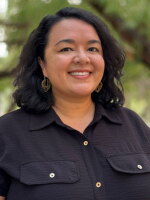
Planet Money co-host Kenny Malone and author & longtime Planet Money contributor Alex Mayyasi sat down for a chat with Nicole Cox and Linda O’Bryon as their new book, “Planet Money: A Guide to the Economic Forces That Shape Your Life” hits the shelves this spring.
NICOLE COX: Has this ever happened to you? You start day or the week with an objective; you have a plan, and before you know it, mysterious, chaotic forces seem to derail things, and despite your best efforts, things don’t work out like you hoped or planned. I’m Nicole Cox.
LINDA O’BRYON: And I’m Linda O'Bryon, thank you for joining us for Navigating Our Financial Times. Despite our best efforts, life gets in the way. Maybe you have to work over the weekend; or you can’t find a childcare center without a wait list, perhaps you wonder why it’s so difficult to meet people, or maybe the box from the food bank contains an abundance of pickles. What if the explanation was less of an uncontrollable strange force and more of a broad and external economic one?
NICOLE: But what if there was a guide that could light the way to help navigate the powerful forces that affect every facet of our lives? “Planet Money: A Guide to the Economic Forces That Shape Your Life,” shares insight and stories to makes sense of the world of economics. We are happy to welcome journalist, author and longtime contributor to Planet Money - Alex Mayyasi and reporter and co-host of Planet Money, Kenny Malone.
KENNY MALONE: Hello!
ALEX MAYYASI: Thank you so much for having us.
KENNY: What an introduction. It sounds like our book has solved all the problems of the world. And you know what? Maybe it has. Maybe it has.
NICOLE: I like to believe that.
LINDA: Well we have a few more for you.
ALEX AND KENNY: Okay, okay, okay.
LINDA: Well, In a recent Planet Money podcast you all point out “In the age of TikTok and Polymarket, it can be easy to overlook the humble book. But books are one of the most influential technologies ever invented”. What were the reasons Planet Money decided to write a book, and was book publishing what you expected?
KENNY: This is my favorite question that we've gotten on book tour because as one of the co-hosts of the show, I was wondering why we needed to write a book. It's like, haven't we said everything we needed to say over like, what, seventeen years or fifteen years of podcasting? But I think two factors sort of conspired. And Alex can talk to some of them as, as the author of the book, who knows a little bit more.
But I think the first is, is like literally, NPR had hired a couple of book agents, and they were looking at various shows and products to see what might make sense for a book. And they, they know this world. And they had approached our executive producer, Alex Goldmark, and said, we think there's a Planet Money book to be done. And they worked together to come up with a concept for it. So. So there was simply I, you know, in the economic terms, there was, I guess, market demand for Planet Money book. So that would be one reason.
But as a podcaster interested in this book and what I think Alex has done an amazing job of is it's true, I guess we have said everything that we want to say to some degree on the podcast, but there are really, really visual parts of economics that we can't get into in an audio form. And I think the thing, the thing I'm happiest about with this book is it takes full advantage of the visual medium. It has these wild schematics and blueprints and like zany looking things that capture the essence of planet money. But we couldn't do on air. And I think it explains in these beautiful graphics and, and like pictures. And in addition to Alex's writing, I think it just, it taps into a kind of storytelling that we've never been able to do. So those are my two answers. But Alex knows a little bit more about the background and what he learned about publishing.
ALEX: Yeah, I mean, from my perspective, I had been working with Planet Money, but I was kind of like the guy from the print world of articles and books. And so I just.
KENNY: The weirdo book guy, Alex.
ALEX: Yeah. Yeah. And so I just had thought for years that, like, there should be a Planet Money book and I wanted there to be a Planet Money book. And I approached Planet Money and there was this great fortuitous timing that they were also thinking about a book project. But also, I think like with a book, it had some things going for it. Kenny talked about the ability to, you know, add illustrations. You know, how many times does Planet Money had like a chart they wished people could just see, but instead we need to like, uh, you know.
KENNY: We had an opera singer sing a chart once. Like that's how desperate it has gotten.
ALEX: So like, we could show how to do it. Yeah, we could show people charts. That's cool. But also like other things that were great about a book. There's this way that we could really produce a guide. I think the Planet, my podcast can help people be a guide through their lives. But like a book, you have this feeling of kind of like a guide you can hold in your hands. We could structure it going through different parts of your life, like work and career, saving and investing, but also leisure, love and romance. And so kind of like tackle some of the biggest ideas and do it in this manageable, approachable way. And then I also think there's a way that, and maybe you both experienced this yourself, but on Planet Money, we often, you know, have these experiences. We, we kind of have like a story and a topic for an episode. And I'm like, this idea also explains all this other stuff over here, but you have to cut it. You lose it for time and for focus. But like in the book, we could have a sidebar, we could kind of go explore those other related ideas. And so that was a really cool feature of print that we don't get to do with Planet Money in audio.
NICOLE: And, there are so many creative connections to real world situations that allow people to see how economic concepts and principles play out, such as guessing the weight of a cow explains why you can’t as an individual beat the stock market (Group Wisdom). How did you go about deciding what real-world examples would be used?
ALEX: If I tried by myself to make a book about the biggest ideas in economics and do it with always these great case studies, examples, personal stories. I would still be writing, but I had this huge unfair advantage that work, you know, this being like a Planet Money book. You know, we have fifteen plus years of this team of talented people seeking out great stories. And so part of the answer is that some of the, like our very favorite Planet Money episodes, those often offered a narrative through line that for some episodes we could say, oh, this is an amazing story. And that could be great. You know, to explain inflation for an inflation chapter, my personal favorite being a story involving, you know, Ricky Ricardo of “I Love Lucy.” Maybe we want to talk about that some more.
I mean, there's, there's no just like one perfect answer for it. But then there were other chapters, you know, we really want to talk about X or Y, you know, we really want a chapter on this. And then it's, you know, going and looking for those stories, you know, for automation. It was, you know, we want a story about automation, especially as people are talking about AI, we'd love to kind of look to the past for guidance. I decided, like I will. I ended up speaking to someone who was a bank teller, got started in the 1980s just as her bank, her employer was installing its first ATMs. So we could talk to her about. Or I could talk to her about her experience working as a bank teller when automated teller machines were going in: a machine literally meant to automate her job.
LINDA: And we are going to talk about automation later in the show. But let’s start with your very first Chapter, “The Pickle Problem,” you share the story how an initially perceived unhelpful food donation of bulk pickles led to a market- based system of buying and selling, with auctions being the determinator. It paints a vivid picture of one way to allocate scarce resources. So, tell us about the pickle problem and also whether it makes a case for capitalism vs. central command and control?
ALEX: So, for the record, I love pickles, but—
KENNY: No such thing as too many pickles for you, Alex? Is this what you're getting out in front of?
ALEX: Uh, I mean, yeah. Threaten me with a good time, but
KENNY: I know this isn't the question, but sweet or dill pickles?
[laughter]
ALEX: Dill. Dill. Yeah. Okay. Okay, so I love pickles, but the start of this chapter and the start of the Planet Money book starts with this problem: When the director of a food bank in Alaska gets a huge shipment of pickles. And, you know, she appreciates that it's a donation, but it's just it's actively unhelpful. Like most people coming to her food bank don't really want pickles. They're in these huge jars, and food safety regulations keep her from repackaging them. So they're really just not helpful.
And part of this kind of like nationwide network of food banks that that distribute donations to food banks that need them. And she ends up going to a meeting with the other food bankers and the people who run the national network and they say, hey, uh, you know, they end up working with some economists from the University of Chicago to see if they can improve the system they use for allocating, who gets which food: Who gets this peanut butter, Who gets these pickles? And, you know, she talks about the pickle problem. And other food bankers bring up similar examples, like, you know, someone in Idaho getting a big batch of potatoes and like, they've already got plenty of potatoes from local farmers. That's, that's, that's not that helpful either.
And economists are like, oh, this is, this is Econ 101. This is a very similar problem to what, you know, economies like the Soviet Union had where there are these people at the top or the centralized group of people making decisions about where to send these resources, but they don't have all the information that really important information about who's got fridge space, who needs what goods. Those are people, you know, scattered around the country who have that local information and prices are a great way to share that information.
You know, prices often tell us about what's scarce, what's available, how valuable something is. Then you can use your money to buy the things you need. And so it sounds a bit odd, but they set up this system where donated items had prices so food banks could buy what they need. They did create their own kind of currency that the food banks got each month. So it wasn't like they were literally paying for it. But in an important way, there was now a kind of market economy where, you know, lots of food banks really wanted peanut butter so they could pay for that. But then, you know, food banks were buying exactly what they needed. And they found that this led to food banks getting more food and more food was donated. Because, you know, this the food bankers were able to very quickly allocate it to where it was needed and used. So, it was a win-win.
KENNY: And Linda, to your question of what is the lesson from this chapter? This is a classic Planet Money story, and I think it is really important to understand the narrowness of this anecdote. When we broaden it to like, does this prove that centralized government is not as good as a full free market sort of approach? I think it's probably pretty dangerous to generalize from the pickle problem, but I think why we use this as an example is because there are times, we can all certainly agree that free markets have many failings, and we can discuss those for hours.
But a free market can be a tool to allocate resources. And there were lots of limitations on this particular free market. I think, Alex, everyone had the same amount of money. So you really are getting a tremendous amount of information through this market. And that's what this shows is that is that you can use price. You can use demand as a proxy for all kinds of information baked into that stuff. Like who has fridge space for this? Who has enough money for this? Who wants this, who doesn't want this? That's a ton of variables. And all of that can be boiled down into like, okay, so how much do you want it? You want it for ten pickle points? (Or whatever it was). Um, in this case works very well. And I think we like it as a isolated, as an isolated example of a free market at its best. But the book will also discuss the many, many, many ways that a totally free market can fail and require interventions.
ALEX: Yeah. And that's something really interesting too, is that right, like you're seeing the power of prices to coordinate economic activity in a decentralized way. But you also had people designing the market to make it fair.
KENNY: That's very centrally-controlled market. Yeah.
ALEX: And so they thought very carefully about how to make sure that like food banks with less resources did not miss out. And in fact, they often gave the relatively poorer food banks in terms of fewer resources or that had more need for food, more of this fake money, this fake currency, so they could buy more food, right. So this is both how market economies can be superior, but also the importance of designing for fairness and for the outcomes you want.
LINDA: And that great line that there was a tiny newspaper in every price, which blends the information that pricing gives, to your point.
KENNY: That's our very rosy Planet Money take on a free market, which we are occasionally accused of being perhaps too rosy on that stuff. But we are fully aware, and I think our reporting would show that the failings of these systems, when they are not done correctly. In this case, it is hard to argue that it didn't work. But to Alex's point, there was a lot of planning going on, so it was not a free-for-all in any way, shape or form.
NICOLE: Well, speaking of scarce resources, “Planet Money: A Guide to the Economic Forces That Shape Your Life” traces the history of the New York City Marathon from Sept. 1970, when only about 125 runners assembled in Central Park for the first one, and “the rest of the city barely noticed.”
Today the New York City Road Runners non-profit organizer has to turn people. How is it determined what 50,000 runners get to enter the race? And what lesson can non-profits take away from this?
KENNY: Nicole, I was turned away this year!
ALEX: Oh, Kenny!
[laughter]
KENNY: I was one of many. I've lost track of how many people…
ALEX: But it was, it was, it was totally fair though, right?
KENNY: I do not feel mad. Yeah. So this, this is kind of the whole thing, which is, we love—I personally love the example of the New York City Marathon as a case study in allocating a scarce resource fairly, because, I believe the term that I have heard is they have sort of optimized for “envy-freeness” is, I believe, the term. Where it's like, even if you get left out, you just don't feel that bummed about it because you're like, ‘yep, yep. Fair enough.’ And the way that they've done it, I think is really brilliant because we just talked about markets and the way that price can be used as a proxy for lots of things. And often that is used as a proxy for demand. How much is someone willing to pay for something shows how much they want something. Well, very obviously that begins to fail when like, I'd really like to run the New York Marathon, but if, I don't know, Jeff Bezos also wanted to run the New York Marathon, he can pay a lot more. And does that mean he wants to run it that much more than me? I don't know, it doesn't really quite work that way.
So what the New York Marathon has done is they've created a kind of patchwork of ways to show that you really want to run the race in what I would say are very fair methods, and each kind of optimizes for a different thing.
So the first classic one is just a lottery. That is the fairest, like least sort of biased way to give anything out. So enter the lottery. If you get in, great. If you don't, you're out. That's what I did. I entered the lottery. Um, I live in Washington, D.C., so I can't get to New York to do some of these other methods. And I was like, ‘all right, you know what? It's not my year.’ That's fine. So they give a certain number of spots away their fairest way. And it's also often the way that we give things away that are undesirable because it is truly like, you just can't, you can't quibble with a, with a lottery. So if you think about like, you know, when there is a military draft, it's a lottery because it's like, well, you know, it wasn't my day. I got drafted, right?
The next method is kind of price. So they do do a little price one like, do you really want to run it? Do you want to pay to run it? And the way that that works is there's kind of two methods. There's like a, an international package that you can buy because they want international runners, but it's pretty expensive. There's only a certain number of them and it does cost a lot. And then you can also like get a bib to run the race through charity. Like you work with a charity that has a spot, you raise a certain amount of money. And that's just another way of like sort of buying your way into the marathon. So that's price. I could have done that if I really wanted to. And one year I probably will end up doing that if I really want to run the New York Marathon.
And then there's merit-based distribution, and it wouldn't be an interesting race if you didn't have the world's best racers in it. And so there's a system where you can qualify for the New York Marathon by running a really fast time at another race. And so if you really, really want to run the New York Marathon and you're really good, you can work your way into the race by running really fast. I'm nowhere near fast enough to do that, so, fair enough.
And then the fourth way—I might be leaving one out. But the way that I find the most interesting is this system that they call the 9 + 1 system. And this to me is really like if you, if you really want to run this race and you really want to show that you want to run this race, you don't have the money to buy your way in, you're not an elite athlete. Okay? Just run nine other New York Road Runner races, official races, volunteer at one, and then your spot is guaranteed the next year in the marathon. Sort of a sweat equity kind of approach. And I just think it's brilliant. I think a lot of New Yorkers end up in the race because of this. Like, you need to be around the area to run. So you have a New York Marathon made up of real New Yorkers, plus people that won the lottery, plus really elite athletes who get in and you get this nice mix. And if one of the methods doesn't work for you, you can't be that mad because there was another method that you probably could have done if you really wanted to do it. And so for me, I was only willing to do the lottery. Easy peasy. So I can't complain. It's like I wasn't willing to do the other ones this year. So too bad for me. But it's a really good case study on how to fairly allocate something.
NICOLE: So the last one being effort, that you mentioned, right?
KENNY: Effort, yeah.
NICOLE: So types of fairness, it is a pretty amazing combination of several factors that you said that gives an opportunity to someone that really wants to participate, if it doesn’t work out, you were given an ample opportunity.
KENNY: And different ways to show how much you value something. Because often we do default in the economic world to “money is the best way to show, it is the easiest way to show that you value something.” But clearly there are other ways to show that you value something. And I think that the New York Marathon recognizes many of these other ways, and I think that is what's brilliant about it.
LINDA: So again, if you think about lessons learned, you point out items like housing, affordable housing, healthcare, can any of these thoughts be used in scarce resources when it comes to some of these issues?
ALEX: Yeah, absolutely. I think prices work really well for certain types of goods. Like Pokemon cards? You know, it is true that if you have more like, you know, the rich kid in class probably has more Pokemon cards than you, but like that doesn't feel like something we need the government to intervene on a mass scale. And to a large extent, like, you know, if you like Pokemon cards, you'll spend your money on them. If you don't, you'll spend them on something else. Like, you know, prices work well for a lot of goods.
But then a reason the New York City Marathon is a place where prices break down is just like, you can't just keep increasing New York City marathon spots to meet the high demand for it. Like the streets only accommodate so many runners. This is true of a lot of concert tickets for really, really popular musicians. And this is true for health care, you know, where like there is some limit, you know, there are only, you know, especially like if it's something like a kidney, you know, we've kind of decided that's a place we don't want prices to be relevant. We want to allocate it in a different way.
So, you know, there are parts of the economy where prices don't really work well either because we have moral qualms with it or because, you know, it's just something that you just can't keep increasing. You just can't manufacture more and more. You know, it's scarce in a way. And you see it for something like health care or surgery, affordable housing, like if someone's only quote-unquote, “willing to pay a certain amount of money” for a home, you know, that's probably not because they don't value it. It's just like they may not have the money. And so those are the types of parts of the economy where I think it can be really helpful to think about other ways to allocate scarce resources, like the New York City Marathon does.
Lotteries. You know, we see lotteries for affordable housing because there are more people who want it and need it than we have available units. And, you know, there are these other ways that you could kind of show in ways other than money, how much you need or want something, become relevant too.
KENNY: I do remember the first time I had heard the term sweat equity was, I think, when my dad was doing work with Habitat for Humanity. And I seem to remember like so Habitat for Humanity would identify possible homeowners on a need-based basis. But then in addition to just meeting some sort of need-based standard, there was a sweat equity requirement. So if in addition to getting a house at a steep discount, a certain amount of effort or work, I guess needed to be put into the project. So like that person had to help build the house. And I think that is a system that recognizes, to some degree, that price needn't be the only way to allocate something. Need needn't be the only way to allocate something there. I think there's probably more going on, like a feeling of ownership when you help build a thing. But I do think that was the first time I'd heard sweat equity. So I think, you know, putting time into something as a way to demonstrate how much you want it is, I mean, it's not rocket science, but it is true. I do feel like in the world of economics, we sometimes just forget it and we're like, price is what matters. And time is simply money. So you really are putting money in, which is true to some degree. But like it is maybe simpler than that. It is just when you really want something, you put time into it. And that's a one way to show that you value something.
NICOLE: Absolutely. Then you are more invested in the project, and, you know, you have more interest in carrying for in the long term, I would imagine.
KENNY: I think about it with cooking too. Some people are like, the food tastes better when you make it. And I believed that until I started cooking more and I was like, no, I think it's worse. This is bad.
[laughter]
KENNY: I made like these lentil Sloppy Joes the other night and my wife was like, “these are great.” I was like, “I think they're terrible. What are we doing?” Anyway.
LINDA: So, healthcare is another issue you have talked about that not everyone can afford. Is there a lesson learned from the New York Marathon where there could be more tiers of participation in healthcare than we have now? For example, not totally market-based but not completely subsidized by the government either. Somewhere in between so that every US citizen could have some level of healthcare guaranteed? Or is that too pie in the sky?
KENNY: I think it's a. It's a tall order to ask the New York Marathon to fix health care, for sure.
[laugher]
LINDA: We were hoping.
KENNY: But I do think—I know look, I think the thing that if we step back, we can take away from the New York Marathon is that whenever there is a very scarce resource, choices need to be made by someone about how we decide who gets those, those scarce spots in this case, in the New York Marathon. And the organization, the New York Roadrunners, I assume, like in sort of collaboration with the city of New York, because they need the city to be on board with this to shut down the city. They have made choices to not just like, optimize the price that they can get for these spots. And I think what's useful is just to, to very clearly recognize that these are all choices being made. And that is almost always true in any of these systems.
Like someone, maybe it's elected officials, maybe it's voters voting for those elected officials. Like, we are all in conversation when it comes to scarce resources about how much we want the system to shift towards a purely market-based system versus how much we want something else. And I think for me, that's what the New York Marathon shows is like. They've made a very clear choice to do like four or five different things that generally seem pretty fair. And that seems to work for everybody. But I don't know how often those decisions are being made consciously versus just status quo bias or just momentum in other areas. And I think it's worth just thinking that through. Are there other ways? Are there other methods? Should our elected officials be considering them? These are all things that I think the New York Marathon can teach us. Like, have we thought this through fully? Are there better ways?
ALEX: I mean, I think to a great degree, we already see a lot of this kind of thinking in healthcare. You know, the United States famously has private healthcare, but it is not the case that like, if you're scheduled for surgery tomorrow and then Jeff Bezos shows up with more money, he can just bump you off the list. I mean, I should maybe say like, it's possible, I don't know, but, you know, like we, people are not bidding necessarily on the best surgeons. You know, there is a lot of intervention, right. So the United States government, you know, provides lots of subsidies for different people to afford health care. Often when people need certain types of healthcare, like an organ, it is a decision made by, say, a panel of doctors based on medical need. You know, we might say, okay, well, like how young or old is this patient? How great is their need, king of based on the years of expected life they'd get from this and other factors?
So I think this thinking is actually absolutely present in healthcare already. And it would probably be helpful if we talked a little bit less about private versus non-market versus not. And just figuring out like, when does having prices do the most good? Because then you might have competition and people can make clear choices. And when are the prices really just not helpful in these kind of unique cases? And therefore, we should be thinking a lot more about other approaches, like whether it is, you know, doctors making choices based on medical need or people kind of showing and demonstrating their need in other ways.
LINDA: You know so much of economics though is market-based. We looked at, you talked about collective prosperity, you look at the gross domestic product, you look at the stock market, sort of this, ever-let’s keep growing. What I think I am hearing you both say is though there are some other imperatives beyond growth and beyond prices?
KENNY: There certainly can be, if people want to optimize for different things. Those are metrics. They are by I don't believe that the gross domestic product was invented to be the end all, be all metric. And you've seen other countries look to shift the focus on other things. I mean, I think famously, Alex, there's some country that does gross national bliss or something like that?
ALEX: I like gross national bliss. Bhutan does gross national happiness. Yeah. Kenny will develop the gross national bliss index, and I'm looking forward to its release.
KENNY: Trademarked, just trademarked that!
[laughter]
ALEX: But I think what I've definitely learned from economics though, is that like GDP should not be the end all, be all. There's this fantastic quote from, uh, Robert F. Kennedy, senior about how GDP tracks almost everything except that which is important to our lives. You know, GDP tracks, you know, the cost of building prisons, but it would not—and I'm getting away from his quote a little bit, but it doesn't, you know: Prisoners being imprisoned shows up in GDP statistics. If all those people were released and spent all their time volunteering in libraries, that would not show up in GDP statistics. And yet, when people try to develop alternatives to GDP, like the United Nations developing a human development index to capture other aspects of health and flourishing, they really just very highly correlate with GDP and other things we really care about in terms of life expectancy, lower child mortality, even happiness, as measured by various surveys. They really highly correlate with GDP. So I think GDP and average money per person is not the end all be all. But over the long run, very little matters more than GDP growth because it brings people out of poverty, and it is highly correlated with the things that really enable human flourishing, like health.
NICOLE: When we come back… find out how stopping pirate ships in the 1800s is connected to lower prices at stores like Walmart today. You’re listening to Navigating Our Financial Times.
[NPR Network Break]
LINDA: Thanks for joining us for Navigating Our Financial Times. We’re speaking with Alex Mayyasi and Kenny Malone. Their new book is “Planet Money: A Guide to the Economic Forces That Shape Your Life.” I’m Linda O’Bryon.
NICOLE: And I’m Nicole Cox. In addition to full chapters, the book also offers additional shorter-read segments, such as Postcards from A World Tour of Spectacular Goods, Relationship Advice form Economists and what looks like a sketch for a Rube Goldberg machine explaining how Norway became a destination for tourist
LINDA: One of those postcards, “Freedom of the Seas” explains how pirates captured trading ships sailing through the Strait of Gibraltar until the 1800s, when the US sent a naval squadron. Today agreements among powerful nations have led to the assumption unprotected ships are unlikely to be captured by pirates. You point out without this freedom of the seas policy, prices at Walmart might include additional cost .
Well now with the war in Iran, we’re seeing real time the impact of closing down an important waterway – in this case, the Strait of Hormuz – and the impact on oil prices. What can we learn from the 1800s and the power of agreements with other countries?
KENNY: You know, Linda and Nicole. What I would first like to say out of that is hearing all of the weird stuff in this book read aloud is both, I think, a wild and accurate. Yes, there are postcards. There are schematics.
ALEX: We haven't even talked about the ducks gambling in a casino.
KENNY: There are ducks gambling in a casino.
ALEX: You know, one of my personal favorites.
[laughter]
KENNY: Not sure how this all sounds in a podcast, but I think you have to pick up the book to see it all. I'd say that would be my one piece of advice, but yes. Okay. 1800s seafaring question: Do you want to start, Alex?
ALEX: Sure. Yeah. So, I think what happens in moments like today when the Strait of Hormuz is, you know, effectively closed, when ships lose the assumption that they can just sail without threat from another country or from pirates, is we see how much we take for granted this idea that, you know, a cargo ship should be able to sail across the ocean from one continent to another. And we just assume that no pirates will take it over, that no country will just seize it and take the cargo to enrich themselves. That's a relatively new phenomenon. You know, until a few hundred years ago, of course, that was that was normal and part of trade that, you know, your cargo might be taken by pirates, by privateers. And it's just moments like these, you know, when that assumption goes away in certain key waterways that you see the cost where now I think everyone going to, to pump gas, that's the main way we're seeing it. The prices have gone dramatically up. And I think you kind of, you know, you can imagine that the relatively low prices we often enjoy, whether that's Walmart, Amazon, different stores like we have, we have somewhat taken for granted the fact that this this huge accomplishment that piracy is no longer a norm across the world's waterways.
KENNY: And whenever these sorts of maritime issues crop up, I'm sort of shocked by how much things have not really changed since olden seafaring times. We think of what the great sort of globalization that happened in the sixties into the seventies, into the eighties, and obviously that has opened up a tremendous global economy. Prices have gone down. Lots more goods have become available in many more places. And I mean, naively, maybe I just think of globalization as like planes flying all over the place. But that's just not it. Like goods are moving by boats, by ships, the vast majority of times. That is the intricate ballet of the modern global economy. And it is so reliant on just these, these one or two or three or four or five different passageways. And it just feels like, you know, being in, you know, AP European history. And it's like you learn about one waterway that that became disputed and it stopped the entire industry. And it's like, we're not that far from that. It's just that the ballet has been going on fairly smoothly for most of our lifetimes. And when it doesn't, when the Panama Canal gets blocked up, when the Strait of Hormuz is disputed, it stops. And there's a lot of friction that we just took for granted, I think.
LINDA: And in this case, if the war does end soon, how long will these economic effects likely be with us?
KENNY: I wish I knew the answer and I would make trades based on that answer. [laughter] Alex? I mean, I just think the reality is we simply don't know. Anytime these kinds of disruptions happen, people are making changes to deal with the disruption. How easy is it for those companies or those entities to unwind those changes? I think a lot of these lessons we learned from Covid and the supply chain problems there. We saw things called the bullwhip effect. I believe it's called where companies would dramatically shift production or ramp up production and then and overcompensate. And so that would cause like a dramatic fall in certain product prices. Uh, I just think we don't know because everyone's scrambling. And what we'll see is what that scrambling has wrought. And I don't know. Alex, maybe, you know, you should tell us if you do.
ALEX: I think what we know for certain is that, you know, if the strait does open back up, it doesn't mean that everything goes back to exactly the way it was before the war started. Like, that's what we do know for sure.
To Kenny's point, businesses adjusted in response to this. There's key infrastructure that was destroyed or damaged that will take time. And I think there's also there's also just that question, right, that freedom of the seas is something that has just been assumed for so long. And I think at a moment like this, I don't think immediately people go right back to thinking, oh, navigating the Strait of Hormuz is no problem. And their insurers will not immediately assume it is perfectly safe to sail through the Strait of Hormuz, and therefore we will offer insurance at low rates, and that those are all costs that will continue to show up, you know, distributed throughout prices, throughout the global economy, even if and when this this conflict does end.
KENNY: We've been talking about the little signals that we like to watch and the ways that information crops up. And Alex mentioned insurance. I actually feel like that's, that's one that we at Planet Money end up talking a lot about internally. It's like, what are insurance markets saying about building houses right now in South Florida? Or what do insurance markets say right now about making a documentary about a, something that you might get sued over? I think insurers are often a leading indicator of kind of where things are going. So it's sage advice from Alex there to watch how that all works.
NICOLE: Okay, so, a signal of where they are going, not an echo of what people are feeling?
KENNY: I would say it's probably a little both, but insurers are worried about their bottom line. Right? So if their analysts are assessing the risks in a somewhat removed way, and they're finding that it's simply more risky to send a bunch of cargo through some certain passage, they're going to charge a premium for that. And so that, that's the signal that you would get. It's like, “oh, we thought was safe to do this, but we can no longer get insurance to, I don't know, ship through some route.” Those are often signals of where really smart people think risks exist.
ALEX: Yeah. I mean, insurers. Insurers are trying to make predictions about the future, at least in terms of the level of risk. And then they are, you know, putting their money where their mouth is on those. They are using those predictions.
KENNY: They make bets on it, yeah.
ALEX: You know, they make bets to price things. They're effectively making bets. So it is, you know, it's a place to look at well-informed people who have huge incentives to get their predictions right and putting money on the line. So that's why insurance rates often can be a very good place to kind of see the future.
KENNY: One of my favorite insurance things is if you are doing like, let's say you're a football team and you want to do a million dollar half time kick or something, you will often hire an insurance company and they will then have their internal people run metrics and numbers and simulations or whatever to figure out how likely it is that someone's actually going to make this kick based on certain criteria. And then you will often buy an insurance policy as the football team or the football entity doing this halftime event so that you're just not on the hook for the whole million dollars. Um, so I love the, that's my little love letter to the actuaries who are behind the scenes trying to quantify the unquantifiable. It is often a thankless job and perhaps not always that fun, but I think it's pretty rad that they’re out there trying to do it.
ALEX: But the idea that insurance is boring. Like. No. Not true. Super interesting.
NICOLE: Well, you do have the love letter to insurance in the book?
ALEX: You know, I wrote this love letter to insurance. I think I'll let readers decide how much is, uh, tongue in cheek or, you know, maybe a little Stockholm syndrome in there. [laugher] Uh, but there is there is genuine emotion in there. Especially when I write that, “I'm sorry. I let my renter's insurance lapse just before my bike got stolen, because you know there is—"
KENNY: You wouldn't have met the deductible. How much was your bike?
ALEX: It was a nice bike, Kenny. I have nice stuff.
KENNY: Oh, okay, maybe.
ALEX: No, I don't know. Okay. No idea. But there's a way that insurance is really an enabler, right? Like, I don't know. You know, I want to, I want to go scuba diving. Like, I don't know what I'm doing. No one's going to take me out if they can't get insurance to take out these strangers who want to go scuba diving or do X, Y, Z, you know, activity that involves some level of risk. Like until the insurance agents figure out how to price that insurance and start selling it. Like that just does not happen. You know, if space tourism happens one day, that will be because of companies who figured out better rockets and how to, you know, do the breathing systems. But it will also be because insurance agents figure out how to appropriately risk like price, the risk of space tourism, and then make that insurance available to the people who want to do space tourism, and then it will be possible to do it.
KENNY: Didn’t Katy Perry go to space, Alex? Is it already happening? Do you think there was an insurance policy that Katy Perry had to take out?
ALEX: Probably. Probably. Quite possibly from Lloyd's of London. But I think, you know, if you're going to get a mass space tourism industry, right, like you need the insurance to have been figured out. So like nothing happens, you know, at least as like broad scale economy until we figured out the insurance for it. So there is a way where like insurance really enables our lives. And like, how would I—perhaps you can't tell because I sound so confident all the time—that’s a joke. [laughter] But like, I'm often an anxious person and like, how would I ever spend a huge, huge chunk of my savings and a huge chunk of my future income to buy a house without insurance? Right? That would be absolute insanity. And if I did it, I would just be so stressed all the time. So there are these ways that we really owe a debt to insurance. It can be so frustrating. There's so many terrible things about certain types of insurance, but it really enables a lot of like parts of our economy and, and peace of mind at its best.
KENNY: Now, Linda and Nicole, out of curiosity, are there obscure corners—I guess insurance isn't obscure—but are there non-beloved corners of the economy that you would write love letters to? Anything come to mind?
NICOLE: Oh my goodness, that is a great—well. Taxes.
ALEX: Oh!
KENNY: Taxes is a good one.
NICOLE: There goes my Bingo card.
[laughter]
KENNY: Do you bring up taxes often?
NICOLE: They have a list of things I bring up every interview.
ALEX: Is taxes the center of the bingo card, or…?
KENNY: Is that the free space? Because you always bring it up?
NICOLE: No, there’s the free space. If I go over the list, though, Anne will win. [laughter] Anne will get the Bingo card, because if I mention certain things in the process of one interview…
KENNY: Got it.
NICOLE: So, anyways, it would probably be taxes and you know, everyone is the first to complain about having to owe IRS but look at all of the benefits we all get as a society, whether it’s state, local or federal. So, I would probably, in bizarre way, write a love letter to taxes.
KENNY: Taxes also are a great place to go to just look for explanations for things, like when weird things happen, you can often trace it back to some odd tax policy change.
ALEX: Breeding ground for unintended consequences.
LINDA: And my love letter would be to the stock market because it’s regulated, unlike other ways people are betting these days. Anyway, that’s a whole other story. Nicole?
NICOLE: Our producer Gabe is looking at us, going “you guys are so boring.”
KENNY: No! Come on. The stock market is a good one. I you know, it is easy to dunk on the stock market, but I do think of, uh, a lot of very smart, highly incentivized people doing a lot more research than I can ever do, making bets in the stock market. And so I do often think there's useful information there. It's obviously comes with many caveats. But yeah, I agree. That’s a good one too.
ALEX: I mean, one chapter of this book is basically a love letter to index funds.
LINDA: Okay!
ALEX: So Linda, we're on the same page. Yeah.
LINDA: Should we go into the future?
KENNY: We could try!
[laughter]
LINDA: Okay. You mentioned earlier, the ATM and your chapter, “The Hopeful Tale of the ATM and the Bank Teller” is very relevant today when we think about AI and people being seriously worried about jobs being taken through automation.
How would you lessen some of those fears by what you learned in the tale of the ATM?
ALEX: Yeah. I think none of us know exactly how AI will impact the job market. But I think there are a few lessons from ATMs and bank tellers and past episodes of automation that are helpful to keep in mind.
One is that, I spoke to someone who was a bank teller in the 1980s. It was her first job, and she was there as her bank installed its first ATM. It's an automated teller machine. It's meant to automate her job. I said, “were you worried?” And she said, “no.” And she was right! She was right. You know, the number of bank tellers in the United States kept increasing, even as more and more banks installed more and more ATMs. Maybe there are two really useful lessons from this. One is that economists often talk about how there are some cases where jobs are automated in their entirety, but most of the time it's not jobs that get automated, it's tasks that get automated. So, you know, this bank teller, Angie Douglas, and other bank tellers, some parts of their job started to get automated, like counting money and giving it to customers. But that freed up more time for them to do other tasks, like saying to bank customers, “hey, would you like to open a credit card? Get a credit card from our banker.” Or, “hey, would you, you know, are you saving for retirement? Would you like advice from one of our advisors?” Right? So their job changed in a way. It didn't go away.
There's another lesson called the lump of labor fallacy. And so this is the idea, I think, you know, we might naively kind of think that if there's a certain chunk of work done in the economy every year, if technology and automation kind of is able to do, let's say like 20% of it, then there'll just be less work for the rest of us humans. So there'll be job losses, there'll be less for us to do. But in fact, that's not the case. And it becomes really clear when you kind of broaden your timeline. You can think about back, you know, when the United States, it used to be the case that something like 70% of the population worked in agriculture, worked on farms. That's of course, not true today. Now, a very single digit number percentage of the American workforce works on farms, even though farms in America produce even more food now than they did back then. They've just gotten more and more productive.
But those people are not all out of a job. As many of us know from history classes. They move to the cities, started working in factories, producing new products that hadn't existed a generation ago. There are all sorts of job titles people have now today ranging from, you know, yoga instructor to like account manager that either did not exist or barely existed a hundred years ago, because there's always more types of work that can be done. Humans, we have all sorts of needs and desires, many of which might be unmet. So, you know, if technology does automate some parts of the economy, some parts of our work, that could be disruptive. It can absolutely be a costly transition. But, you know, that doesn't mean there will be no work for the rest of us. There are always new types of jobs, new types of work, new opportunities.
NICOLE: We need your Planet Money rosy-colored glasses for this next question. I’m sure you heard the interview with Tristan Harris, co-founder of the Center for Humane Technology, recently interviewed by Steve Inskeep on Morning Edition. They discussed the use of AI by the Pentagon.
If, as Harris said, the AI industry is racing to replace human workers possibly leading to a future where a handful of companies or a handful of individuals have all the wealth and all the power. From an economist’s point of view, what would that look like? If AI is doing most of the work, and not as many people are earning an income, who will pay for the products and services AI industries are offering?
KENNY: That is a hard one to be rosy about. I think that's fair. Uh, but Alex, I don't know. I mean—
ALEX: Yeah, I've got I've got a pitch here, I think.
KENNY: But before Alex does pitch to be rosy, I will say look: I cover AI a bit and I go back and forth because we look to a lot of these historic examples, and some of them tell stories about new work being created and jobs changing and it doesn't mean that that's smooth, to be clear. Like some of that is quite disruptive and quite upsetting to people whose jobs are changing and then must change. But ultimately, many of those stories work out okay in the long run. But then you look at this technology and lots of people have lots of reasons to pump it up. And so we'll say like, okay, but can you even apply the ATM story to this technology? This seems like it's not just one job, it's every job.
And so I definitely go back and forth like I’m not always rosy on this. And I think it's appropriate to be skeptical, concerned a little optimistic, a little pessimistic, maybe one lens rosy and one lens not. Like weird 3D AI glasses? [laughter] I don't know, but I think that's where I land, so I'm curious, but I'll let Alex have the final word if he wants if he wants to try double rosy glasses.
ALEX: Yeah. I mean, I'll say two things. I think one: It's I feel like it's pretty consistent that economists, even ones who are bullish about AI, they are pretty skeptical of this idea of AI doing all of the jobs. They are both very aware of these case studies where, you know, the transition took a long time and also of comparative advantage. Like AI, it's quite likely it could become better at certain things that lots of people do now for their work. But will AI become better at everything? Are there really not things humans will be better at? I think there are all sorts of things where we want a human to do that work, or there's something about human intuition or X, Y, or Z that will make the human worker very valuable. So I'm skeptical of this kind of like everything done by AI, and it's all controlled by three companies.
The other thing I'll say is that like, I know like it used to be about ten years ago that every article about universal basic income or about the four-day workweek, it was like it was legally required to start with the story of John Maynard Keynes, the famous British economist predicting generations ago that because of increasing productivity, our living standards would rise an enormous amount. And, you know, he's like, our grandchildren are great children and would only work something like ten hours a week. He actually underestimated how much living standards would go up. Countries like the United States and Britain are even more wealthy than he predicted, but we're not working that much less.
And I think one economist made this really interesting point where he said, well, you know, we are working less. It's just that, you know, people in their thirties are working about as much. But now we have retirees, you know, people used to work kind of til they drop dead. But now we have retirement. And children used to work all the time. And now they, they don't, you know, they have summer vacation and they go to school. So that increased leisure just went into children and retirees. And that was not like inevitable. That was the result of choices we made that of government policy, of things people debated and reflected our interests and desires. We wanted people to be able to retire and be secure. And so we made huge policy choices, created huge government programs.
And now I'm just speculating. But I think where people are like worried about, you know, mass unemployment and all these huge gains, like we see that people are really struggling you know, to start families that the opportunity costs are so high that wealthy countries like the United States, you know, they would shrink if it was not for immigration. Like the around the world, the population is like predicted to shrink over time, which could be extremely disruptive to the global economy, have all sorts of problems, just mean fewer people alive to enjoy life. And so, you know, I could sketch out, you know, a world where we make a policy choice, where we say we want people to not have to, to be able to have the families of the size they want and to spend the time with those children they want and not have to make huge life and career sacrifices. Why don't we use, you know, if we do get these huge productivity gains, why don't we channel them there so that people starting families, you know, can really take that time the same way that we decided we want retirees to be secure and we'll, you know, some of the biggest government programs that exist are making sure that people can retire and still have health care and income. They're not perfect, but they do a lot.
So I think sometimes I don't know why we jump right to the apocalyptic scenario when there's so much opportunity and, you know, so many glaring places where we could use more productivity to buy us more free time.
LINDA: Thank you, that is a positive trend. And that is a great place to close it out. The book, “Planet Money: A Guide to the Economic Forces That Shape Your Life” is in stores starting April 7. More information is at planetmoneybook.com.
And you can hear Planet Money on AZPM’s NPR member station KUAZ FM 89.1 in Tucson, 3pm local time every Saturday. Alex Mayyasi and Kenny Malone, thank you for joining us today.
ALEX: Thank you both so much.
KENNY: This was delightful, we really appreciate it.