University of Arizona researchers of various expertise are developing machine learning tools aimed at detecting and treating autism in patients as young as two or three.
The focus for a group of three research leads is on the needs of children with autism, rather than the discovery of a cause or cure.
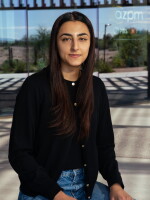
Nell Maltman is the director of the UA Lifespan Language Lab, which researches the links between language, genetics and cognition with particular emphasis on autism spectrum disorders. Maltman has been researching autism for the last 15 years, and has seen the field shift focus. One of her main goals is promoting access to resources for children with autism and their families.
“There’s one model that thinks about things as ‘What’s causing problems?’ Whereas there’s another model that’s thinking ‘How can we actually change our systems to improve the lives of people affected by this condition?’” she said.
Maltman is contributing her expertise in neurodivergent communication to a developing project that is creating virtual avatars with phenotypes — or behavioral characteristics — that would better help categorize children within the spectrum. One model of the avatars will help children with autism practice social interactions and another will help clinicians advance their treatments.
Management Information Systems professor Gondy Leroy says it’s hard to find a cause or a cure, due in part to the spectrum of autism. Leroy is associate dean of research at the Eller College of Management, and her background in MIS and data science brings the technological piece of this research project to life.
“Machine learning is trying to say ‘Autism/No autism, or ‘Cancer/No cancer.’ What we try to do is look at a step before that so that you know why it makes a decision like that,” she said.
She said scientists have long searched for a cause or a cure of autism spectrum disorders, but the data has been difficult to replicate.
“Maybe it’s being recognized more than twenty years ago or thirty years ago. Maybe there is an environmental factor. Maybe it is genetics. So there’s probably a lot going on and not a single cause,” Leroy said.
Last month, President Donald Trump made the claim that a pregnant woman’s use of acetaminophen could be linked to autism. The claim was quickly dispelled by scientists, but later reiterated by Health Secretary Robert F. Kennedy Jr. who then added that circumcision may also cause autism even though there is no evidence for such.
Dr. Sydney Rice, division chief of Developmental Pediatrics at the College of Medicine, denied that the growing number of autism diagnoses constitutes a crisis. She described the discussion of autism at the federal level as “derogatory” and “rude.”
“There’s been talk of this great increase in autism, and that’s not really true. What’s true is that the increase in autism is from the very mild end of the spectrum,” she said.
While the avatar project is still in its first stages, Maltman said the research that she has been conducting with Leroy and Dr. Rice aims to build a deeper understanding of autism and how patients require unique levels of care across the spectrum.
“The more we research and the more we learn about [the autistic] community — as with any community — it’s not just one thing. When you are serving one person, you are serving one person. And their needs might be very different from someone else’s,” she said.