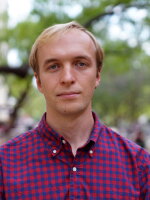
Back when Michael Conto was a bomb squad and SWAT team officer with the Tucson Police Department in the 1990s, he told a certain type of joke.
“We would often make jokes that, ‘Well, we’re going to survive this incident, but the way we’re doing things, we’re going to die of cancer in 30 years,’” he said.
The joke came true when Conto was diagnosed with lung cancer in 2023, beginning a dual battle: one with his illness and another with his former employer, the City of Tucson, for his workers’ compensation under a 2021 law on work-related cancers. The city denied or disputed his claim four times. Earlier this week, it passed on its final chance to appeal his claim, giving Conto the final win.
Though he will receive his compensation, Conto said the two-year legal process wore him down as he struggled with his illness.
“Instead of spending these last three years making my peace with my family, my friends and fighting my cancer, I’ve spent the last three years in a ruthless battle fighting the city,” Conto said. "And it may be my last three years."
In arguments before the Industrial Commission of Arizona and the state’s Court of Appeals, court records show the city’s lawyers making several arguments, but mainly that Conto should have known of his cancer’s connection to his work earlier and that he filed his claim outside the one-year window to file claims after an injury.
The City of Tucson declined AZPM’s request for an interview.
“While we continue to believe that the decision to appeal the reversal of Mr. Conto’s initial denial of an award to the Court of Appeals was necessary to clarify the ruling of the Administrative Law Judge’s incomplete and unsustainable ruling, we understand and will abide by the Court’s decision and will not pursue further litigation in this matter. The City of Tucson highly values its public safety employees and continues to work closely with its TFD, TPD, and PSCD partners to ensure that our employees are taken care of throughout their service and beyond,” Tucson City Attorney Roi Lusk wrote in an emailed statement.
Conto’s story has proven the strength of an Arizona law expanding protections for public safety workers with certain cancers. In 2021, the bipartisan amendment to Arizona’s workers’ compensation law created a stronger legal presumption that certain cancers in firefighters and police officers who had worked with hazardous chemicals were caused by their work, even if the illnesses arose years later. Previously, the burden of proof had been on workers.
Compensation is pegged at two-thirds of a worker’s former income below a maximum monthly wage of about $5,400 for injuries occurring in 2023.
“I think the amendments that were made in 2021 were beneficial to Michael’s case,” said Conto’s attorney, Laura Clymer.
Conto’s work history fit the bill. He joined TPD’s bomb squad during the heyday of the War on Drugs. During that time, southern Arizona was a hotspot for trafficking and organized crime. Military bases and mines supplied a steady trickle of explosives, Conto said, and his unit was called to defuse them across the region. The process involved scanning them with powerful X-rays while wearing minimal protection. The officers inadvertently breathed in drugs and the chemicals used to make bombs, all while wearing heavy armor.
“It’s a young man’s game and it takes, it sucks and steals out your youth and leaves you kind of a broken man as time goes by,” Conto said.
After 9/11, he joined a federal counterterrorism task force. He worked big events like the Super Bowl, trained bomb-sniffing dogs and later had a desk job with the Department of Homeland Security.
His March 22, 2023 lung cancer diagnosis stunned him: he’d never smoked, had never even “puffed on a cigarette,” had no family history of the disease.
He decided to hit the adenocarcinoma fast and hard with an invasive chest surgery. But the procedure didn’t go as planned, leaving him with nerve damage and chronic pain. He was bedridden for months when he got wind of the strengthened workers’ compensation law.
“It’s almost like the statute was written for me,” he said.
On March 20, 2024, Conto filed a claim.

Workers’ compensation claims are processed by the Industrial Commission of Arizona, but ultimately granted or denied by a worker’s insurer. The City of Tucson is among several employers deemed large enough to insure itself for workers’ compensation claims.
The ICA initially sent Conto’s claim back because he didn’t include an injury date, according to court records. Conto added the date of his first biopsy. But then the City of Tucson denied Conto’s claim. When he altered the injury date to the day he became aware of the compensation law, Tucson denied his claim again.
Conto hired a lawyer and requested a hearing at the ICA before an administrative law judge, a position responsible for administering quasi-judicial processes within the state agency. The judge ruled in Conto’s favor, overriding the city’s denial and affirming their ruling when the city asked for review. By that point, over a year had passed since Conto’s initial claim, according to Clymer, his lawyer.
The city kept at it and pushed the case up to the Arizona Court of Appeals, the second-highest rung in the state’s judicial ladder.
In response to AZPM questions, Lusk, the Tucson City Attorney, argued the administrative law judge’s ruling was “incomplete” because they made “inadequate findings as to the date of injury.”
On March 27, 2026, the Court of Appeals upheld the administrative law judge’s earlier ruling. Its final decision said the city did not prove its argument that Conto should have known about his cancer’s connection to his work sooner.
As doctors continue to monitor his cancer, Conto will get his compensation.
“It’s taken its toll. Sleepless nights, the anger, the frustration and the feeling of being not just abandoned but actually betrayed,” he said.
Conto said he’s trying not to be bitter. But he noted the contrast between his case and those of two firefighters whose claims were granted by the city in September 2025 after questions about whether their cancers were covered by state law.
“I think the more that we can do to take care of all of you who are taking care of our community, it’s truly the least we can do,” Tucson City Council member Nikki Lee said at the Sept. 9, 2025 meeting that saw the firefighters’ claims approved.
According to Tucson’s chapter of the Fraternal Order of Police, as of April 24, Tucson’s mayor and city council members had not responded to letters about Conto’s case for months.
On April 14, the national Fraternal Order of Police called Tucson’s handling of Conto’s case a “leadership failure” to its nearly 300,000 followers on social media.
“My experience with the City of Tucson claims is they’re going to vigorously defend them when they think it’s appropriate to do that,” Clymer said, adding that Conto was her first police cancer client but that she has represented several firefighters in similar situations.
Conto said he didn’t fight the city for his own sake. He wanted to make sure he was leaving something for his wife. And he hopes public safety workers with work-related cancers have an easier path in the future.
“If I can make things better for the unfortunate, and there will be, that follow in my footsteps, that was my goal,” he said. “It would’ve been much easier not to fight this and focus on my cancer battle.”
Responding to AZPM questions, Lusk wrote that the Industrial Commission of Arizona, not the City of Tucson, grants and denies compensation claims.
That’s despite court records stating “the City denied Conto’s claim” and a fact sheet from the ICA stating that insurers, which include the City of Tucson, decide whether to grant workers’ claims.
In a later response to AZPM, Lusk clarified that self-insured entities like the City of Tucson send claims to “a third party administrator to evaluate liability on the claim” and that denial of Conto’s claim was “issued” by the ICA, without clarifying if “issuing” a denial is the same as determining one. He said the Court of Appeals judge’s finding that “the City denied Conto’s claim” was “simplifying the facts of the case for brevity and relevance.”
On April 27, the last chance to appeal the ruling further to the Arizona Supreme Court came and went. The city did not take it.