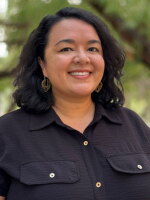
The Federal Trade Commission says Americans reported losing more than $12.5 billion to fraud in 2024, up 25% from the year before. What's driving the surge, and which scam is hitting consumers the hardest? Amy Nofziger, director of victim support for the AARP Fraud Watch Network joins hosts Nicole Cox and Linda O'Bryon to discuss common scams targeting Americans, particularly through their mobile phones:
Full Transcript:
Linda O’Bryon: Online scams and internet crimes are skyrocketing, and they seem to be coming from all angles, texts, emails, and social media. It's not slowing down or getting any easier to spot a scam. My neighborhood even has fake QR codes on some parking meters. I'm Linda O'Bryon.
Nicole Cox: And I'm Nicole Cox. You're listening to Navigating Our Financial Times. Chances are you or someone you know has been the victim of one of these cons. What can you do to protect yourself and others? Here to talk about it is Amy Nofziger, director of victim support for the AARP Fraud Watch Network. Thank you for joining us today.
LO: Welcome, Amy. The Federal Trade Commission says Americans reported losing more than $12.5 billion to fraud in 2024. That's up 25% from the year before. What's driving the surge, and which scam is hitting consumers the hardest?
Amy Nofziger: Great question, and a lot to unpack there. So one, we have money, right? Older adults hold the majority of wealth in the United States, and criminals go where the money is.
Also, when I started in this field 23 years ago, there wasn't the phone. There wasn't the iPhone or the Android that we carry with us 24/7. Scammers really only were able to target us, over our landline, through the mail or out our door. But now criminals can find us basically any time of the day in any place we are because of the device that we carry with us. And yes, we call it a phone, but let's be clear: it's really a mini-computer. So if you're at a traffic light or in the doctor's office, a scammer can get to you.
Also, we're finding that it's a little easier now to get the criminals the money they want, right? Criminals are requesting money in prepaid gift cards, which are accessible at almost every large retailer. They're requesting money through a Bitcoin ATM machine, which right now there's about 39,000 of these in our country. All of these things have led to that. But that number that you mentioned Linda, the $12.5 billion, let's be clear and really multiply that by 10, probably, because of the under-reporting of this crime. Many people do not report it. You ask about which scam we should look out for: There's hundreds of scams that we should look out for. But what I really talk to people about is with any scam, they all have the same kind of scam DNA, right? They are reaching out to you out of the blue with urgency. They are trying to get you emotional with excitement or fear. They are asking you to send money and they're asking you or telling you to lie or keep something a secret. So regardless of which scam it is, listen for those cues and it's probably a scam.
NC: The AZPM News Department covered a workshop in October in Saddlebrooke with Arizona Attorney General Kris Mayes on how to recognize, avoid and report scams. We actually have some audio explaining some of the warning signs that you just mentioned, Amy, for fraud victims:
*So what are some of the warning signs of fraud amongst our older adult communities?
Obviously unexplained changes in behavior or mood can be a sign. Increased secrecy about financial matters. Again, a friend of mine who was ashamed or felt ashamed, maybe they become more secret about what's going on because the bank accounts are getting drained and getting lower and lower.
Missing bills, unusual withdrawals from bank accounts, changes in spending patterns. And then again, the sudden use of cryptocurrency, gift cards, Bitcoin or wire transfers: those are all signs maybe amongst your loved ones that something untoward is going on.*
Full Story:
NC: Blaming oneself and not talking about it with family or loved ones is probably not the most helpful thing to do. What is the first thing you should do if you've been scammed? Does it depend on the scam?
AN: Certain nuances of what kind of scam you're a victim of, you're gonna want to do different things. But most importantly, if you find out that you or a family member has been a victim of a scam, number one is you need to report it. And we like to say that there's really, you know, go to any open door. So if you're comfortable with local law enforcement, report it there first. If you're comfortable with the FBI, report it there. If you don't know where to report it, call us on the AARP Fraud Watch Network helpline. It's a free resource for anyone of any age and then we’ll guide you on where to report it, but most importantly, report it.
And of course, stop communication with the scammer, but report it.
LO: Amy, last year you testified before the U.S. Senate Committee on Banking, Housing and Urban Affairs, and you talked about the issue of fraud that is not unique to older adults, but it often has a disproportionate financial impact. Why is that?
AN: Older adults hold the majority of wealth in the United States. It's just why bank robbers rob banks. The criminals go where the money is. But let's be clear, every single one of us has a target on our back. And actually we're finding through some of the data that's out there now that younger people are actually reporting their victimization more often than older adults. But when an older adult is victimized, it's for more money because they have more money to lose.
LO: So it's really about the money. It's not so much the age group or any other kinds of things? It's where the money is?
AN: I mean, it could be a factor of things, but again, you know, they will steal from my 21-year-old college student, but they would rather steal from my mother, who has a retirement.
NC: But you know what I find fascinating is that you said younger people are more likely to report it. Out of curiosity, is this in part due to people that are elderly possibly feeling afraid of how they are being perceived if they admit this happens to them?
AN: 100%. In our society, we blame victims of financial crimes. And there's already some myths about being older in all kind of aspects of our life. And then, you know, becoming a victim of a scam like this, people are gonna put the blame and shame on you. And that's definitely one thing that we are trying to change. These victims are a victim of a crime, no different than any other victimization of a crime, whether your house was broken into, your car was broken into. We need to have any conversation with a victim with kindness and empathy, not shame and blame.
NC: So that covers some of the data on age-related cons and scams. What kind of data do we have on income level of those being targeted and how are minority households being impacted?
AN: You know, I'm not 100% up-to-date on that, you know, kind of segment of data, but we do know that different types of scams target different income, race, gender, right? We do know some of that.
Someone who is, sometimes we find that people who are lower income sometimes are victimized more by like a government grant scam where there's an opportunity of getting money. Or a sweepstakes scam. Whereas we find that some older men are targeted more for an investment scam.
So there is some breakdown of that data, but we also have to know each one of our own kind of vulnerabilities in a way, right? So I'm not a grandparent, right? So I will not be vulnerable to the grandparent scam, but I am the mother of two children. So then I might be vulnerable to like the virtual kidnapping scam, right? Or I'm not right now looking for employment, so I'm most likely not going to be targeted for an employment scam, but someone who is unemployed might be more, you know, targeted from an employment scam. So we have to kind of look at our own vulnerabilities in kind of our life stages.
LO: And when you say ‘vulnerability,’ there are just so many doors where those scammers can come in because it is online, it's text, it's emails. You know, you get sort of bombarded.
At a certain time, do people get a little bit blunted to all this that comes in?
AN: We hope people remind themselves every single time they get a text, a phone call, an email, a friend request on social media—this is most likely a scam. Let's operate that it's a scam first, and then work with someone to determine if it is real.
You know, I talk to so many victims. We get about 400 calls a day on the helpline. And often what I hear is people don't think it's going to happen to them. It's going to happen to somebody else, but it's not going to happen to them because they went to college, they had a great job, you know, they're successful, whatever it is. But because just like you said, these scams are everywhere, we have to operate that all the time, that one, it doesn't matter, you know, kind of your education level. The scams are everywhere and the scammers are, let's give them some credit. They're really good at what they do. And this is their full-time job: to steal from you.
LO: It is that time of year when people migrate to Arizona, Florida and Texas to escape from colder climates. When it comes to people shipping vehicles, can you discuss the scams you would warn snowbirds to be on the lookout for?
AN: Yeah, I've been asked this before and it's really, this is where you need to be your best advocate, right? You need to do your research.
Take the name of the company that you're potentially doing business with, put it in a new search engine with the name of the company and the words like ‘scam’ or ‘fraud ‘after it, right? Crowdsource other people's experiences with these companies.
You know, oftentimes I say, yes, we all want a good deal, but if what the price they're quoting you is far less than every other competitor that's out there, you might be thinking you're getting a deal, good deal. I'm thinking that's a big red flag, right? Also, how are they asking you to pay? Are they asking you to pay in Cash App or Venmo? Are they asking you to pay by sending cryptocurrency or a gift card? I mean, those are all signs of a scam, right?
So this is where again, take your time, do your research and always try to pay with a credit card if possible. LO: Versus paying cash or some sort of other currency?
AN: Yeah, you have much better consumer protections when you pay with a credit card.
NC: Or gift cards? [laughter]
AN: Don't pay with gift cards.
LO: Unwanted, unsolicited phone calls have been with us for some time. But through AI, there's a new more troubling aspect: Scammers can create voices that sound very familiar. A widely reported scam to the Federal Trade Commission involves an imposter calling, pretending to be a close relative or friend. Let's hear what Arizona Attorney General Kris Mayes has to say about how the technology is being used:
*Scammers are using AI technology. All they have to do with your grandchild's voice is get a snippet off of TikTok or Instagram or whatever. And then they will clone it and then they're calling you and the voice is saying, "Grandma, I have been taken hostage. I'm in trouble." And they want you to wire them $15,000. And of course you get that and you're like, "Oh my God, I'm gonna do that. They're in trouble." Just in general, be wary of these high-pressure tactics. I think we're gonna see more and more of this as AI proliferates and as these scammers figure out they can use this tool to defraud a whole bunch of people. We're just seeing a lot of it.*
Amy, how can you avoid being the victim of this kind of AI scam? You mentioned urgency. What an incredible call if a grandparent is getting that kind of message.
AN: I would go back again to the basics. So the grandparent scam has been around for probably 20 years. So it was very successful without the onset of tools that people are using like AI.
And so, go back to the basics of the scam DNA again, right? Are they asking for money? Is there a call out of urgency? Also ask yourself, is this really how our justice system works in the United States? That to bail someone out of jail, you put your money in a crypto ATM machine or with a prepaid gift card, absolutely not, right?
Also take a deep breath. Take a deep breath because they're getting you in the emotional ether at this point, step back and call the loved one that they're pretending to be on the number that you have for them. And I guarantee you they will be where they're supposed to be. They are not calling you from prison or the hospital asking you for money.
LO: I understand some families have even set up a code word for every member of the family? And if they don't say that code, then it's not a real emergency.
AN: I know a lot of families do that. And I'm not telling families what to do or what not to do. But let me tell you what, how many times I forget my alarm code, right? Like we are inundated with numbers and plus when we're under pressure? So what would hurt if you just said, "Okay, I will find out if this is real." You pick up your phone, you call your grandchild at the number you have in your phone for them and find out. I almost feel like that's kind of more empowering and more protective than having a family password that might be your dog's name that is somewhere on Facebook.
LO: Good thinking, thank you.
NC: Changing gears, Pinal County in Arizona is offering a new program called the Parcel Alert List, or PAL, to help address house title fraud, also called deed fraud. Can you explain what deed fraud is and how homeowners can protect themselves?
AN: So this is something that has actually, it's one of those scam hypes. I'm not saying this doesn't happen, but this isn't even in our top 20 of scams reported on the helpline. I think there's a lot of fear out there and a lot of smart marketing for products to protect yourself with this fraud. You can usually check at your county assessor's office, or whomever, your deed and have protections on it. Most mortgages have title and deed protection insurance already in them.
But be very careful of anyone coming to your house and asking you questions about your home, asking if you're looking to sell it. Be very careful where you're putting your personal information for anyone to steal. And if you are worried about this, certainly go and check your deed to make sure that it's assigned to you or no one's dealing with it. But this is one of those scams that has a lot of hype to it, but we're not getting many complaints about it.
NC: Interesting, and I'm imagining part of the reason for that is because when it happens, the impact is so immense. I mean, your home, the investment, the dollar is connected to that. So maybe that's what's leading to the hype you mentioned?
AN: Of course, because I mean, your home is your biggest asset for most of us. But when we talk about frauds, I think it's better to talk about them with kind of a level mind and not get too caught up in the fear of it, because I think sometimes when we fear everything and we're scared of everything, we're not kind of thinking from cognitive positions, we're thinking from these emotional positions. It's the same with what we talked about with AI. Everyone wants to talk about AI, AI, AI. AI is a tool that scammers can use. But again, they're gonna use AI to get you under the ether, ask you for money, and try to steal from you. So it's the same scams that I was dealing with 23 years ago with just a different tool.
NC: And I suppose if it's a $25 gift card versus someone's house, they would be less likely to report it, where they just let it go and not be judged. If it's a gift card, ‘well, I just lost $25,’ type of thing. I suppose that would contribute to the success rate of those scams?
AN: But we need to hear about those $25 losses, right? We need to hear about those. If you were walking down the street and someone stole your purse and maybe you had $25 in there, I pretty much guarantee you would call the police and report it, right?
And so we need to report these. If you don't wanna report it to the police for $25, that's fine, but report it to someone because that's how we're gonna know what scams are targeting people.
NC: Just ahead on Navigating Our Financial Times, we're going to talk about crypto fraud and what to do if someone needs your help and asks to borrow your phone. That's all coming up in just a few moments.
NC: You're listening to Navigating Our Financial Times. I'm Nicole Cox.
LO: And I'm Linda O'Bryon. We are joined by Amy Nofziger, Director of Victim Support for the AARP Fraud Watch Network. As we've heard, crypto fraud is growing with scammers taking full advantage of crypto kiosks where people can convert cash into Bitcoin or another type of currency. Amy, how do those scams work using crypto kiosks?
AN: The crypto kiosk is not the scam itself. It's the method that the criminals are getting the money. So what we're hearing mostly are imposter scams, like someone calling it pretending to be from Amazon, Microsoft, your bank, saying that there's a problem and they need you to resolve that problem by putting money into one of these ATM machines.
We've also seen it with romance scams, puppy scams, like whatever it is. It's just the new version of them to get your cash, your prepaid gift cards, your gold.
The issue with a lot of these crypto ATM machines is they're not, they don't have tight consumer protections on them. And that's one thing that AARP is doing across the country is they're at the capitals, putting tougher consumer protections on these crypto kiosks. I've heard from victims that have lost upwards of $80,000 in one transaction at these machines. I had a woman one time that I spoke to from Las Vegas that it took her two hours to insert her cash into one of these machines, that the clerk at the store thought she looked tired. And so actually brought her over a chair so she could be more comfortable while she inserted her money.
LO: That's incredible. And so what is the chain of events? Someone gets a call, a text, and will the scammer actually say something like, go over to your kiosk, get to your gas station and insert the money?
AN: They'll certainly get you first wrapped up in the story. They'll make you think you missed jury duty and that you're gonna be arrested if you don't pay. And the criminals use, kind of, all of the tactics out there, whether it's they're nice at first and then they're authority and then they're mean, but then they're gonna do you a favor.
So they'll say, “actually, if you can get this taken care of today, I won't send the sheriff over, but what I'm gonna need you to do is I'm gonna send you a QR code and I need you to drive to, you know, 123 Main Street,” because the criminals have already gone online and found out where the nearest crypto ATM is to your—they’ll look up your zip code and they'll know where the closest one is. They'll say, “yeah, don't worry, we have a partnership with ABC store. It's up at the front of the store, so you know it's safe. Actually, this is the way that the government prefers payment right now because then they don't charge you tax on it.”
They'll come up with any excuse possible to make you believe. So, and they'll stay on the phone with you the whole time. That's the interesting thing that so many of our victims have told us, is that the criminals will stay on the phone. And that's so you don't have the opportunity to call a friend or call a loved one or get out of their spider web of lies.
So they'll send you a QR code. You'll take your cash to the machine, scan the QR code, insert your money, basically, you know, press send and then that goes into the criminals’ crypto wallet.
NC: You mentioned how consumer protections are starting to be put in place to assist with these situations. In Arizona, a new law went into effect in September to provide some protection. The Cryptocurrency Kiosk License Fraud Prevention Law lowers the daily transaction limit to $2,000 a day for new customers and $10,500 for existing customers, requires visible warnings on kiosks, establishes a refund policy for those who report being defrauded within 30 days.
Let's listen to this clip from Arizona Attorney General Kris Mayes from the workshop in Saddlebrooke on how these kiosks were brought to her attention:
*We started really addressing Bitcoin ATM machines really aggressively when Sheriff Rhodes in Yavapai County, my home county, brought this to our attention. They were seeing these Bitcoin ATM machines being set up in food marts or gas stations. And our sheriffs were seeing seniors walking into the gas station and walking up to these Bitcoin ATM machines with the phone in their hand and the fraudster on the other line saying, "Deposit $20,000 into this Bitcoin machine." And the sheriff said to me, "Hey, Kris, can we at least put some warnings? Can we jointly warn folks against using these Bitcoin ATM machines in this way?" And then we together went down to the legislature to get legislation this last session to at least limit the amount of money that people can put in at one time.
Now, I would like the legislation to be tighter because the cryptocurrency industry fought us on this. Imagine that. And so I'd like to tighten it up. I don't know if the sheriff would like to probably, I'm sure he would, but our sheriffs have been amazing in helping us spot and deal with these scams.*
How effective are these consumer protection laws against unfair and deceptive practices that originate, let's say from outside of the country?
AN: First, I want to just say, I'm so proud of our AARP Arizona team who worked so hard on working on that crypto legislation in Arizona. It was fantastic, and I know this was the right step. I think they are going to have a big impact, but we really don't know because a lot of these new consumer protections on these ATM machines don't have the data to show.
Vermont is probably the farthest along with the legislation that they put in place. And the last I heard, there's only one remaining crypto ATM machine in Vermont right now. Now, of course, the criminals are sending them down to New Hampshire, but we're working on that as well.
But we can do a lot here with strong consumer protections, with education, with victim support, to stop the flow of money that eventually maybe these criminals will move to something else because we're not making it as easy for them to steal from us.
LO: Certainly awareness is an important part of this. If you played out this scam, what if someone, the potential victim, just said, "Well, what about my credit card instead of the currency?" Because you know there are limits on credit cards, but once it's cash, whether it's an ATM or a Venmo, the cash is gone, very hard to recover.
AN: Yeah, most of the time the money is gone, right? So yes, there are better protections with credit cards, but it depends on what you're purchasing. We have a lot of victims of tech support scams that think that they are actually purchasing a real tech support program, but it's nothing but a scam. And we've heard that credit card companies aren't reimbursing people because they said, "Yes, I want to buy it."
So what's more important to me is that we stop it in the first place and don't offer the criminals any access to any of our financial products or means that we have.
LO: Great point. Well, unfortunately, even a moment of kindness to strangers can cost thousands of dollars. It only takes a few minutes of someone who has access to your phone to transfer funds, and this person could be standing right in front of you. What should you do if you're approached by someone asking to use your phone?
AN: Yeah, this is one that we've started to hear about and it's affecting, I think, a little bit of a younger demographic as well. So what happens is someone will come up to you at a park, a mall, and say, "Oh my gosh, I lost my phone. Can you please, can I borrow your phone so I can call my mom?” or “can I call Uber,” whatever it is that they need to call. And you being a good citizen, passes over your phone and what you think they're doing is dialing their loved one. But essentially what they're doing is finding where your Venmo or your Cash App is and then transferring money directly out of your peer-to-peer payment app, and into theirs. So my best advice with this scam is to certainly hold on to your device. So we certainly want to help people: “I can call your mother for you and put that on speakerphone,” right? So I keep my phone in my hand, I put it on speakerphone and I dial their mother.
Additionally, if you are someone who uses a peer-to-peer app like Venmo, Cash App, or Zelle, always sign out of the app. Do not leave it open on your device because if someone has your phone, they could easily just go into your phone search bar, search Venmo, find the app, and if it's opened and not under password protected, they can easily transfer the money out of your account right then.
LO: Well, that would affect you if you lost your phone as well. And should you also be putting some sort of code so they can't access your phone at all?
AN: You should 100% have a code on your phone. Please do it now and today.
LO: Thank you.
NC: There have also been ‘favor’ requests through texts, social media, and email that appear to come from someone you know or normally trust. Can you discuss the ‘Do Me A Favor ‘scam to help people from being—I’m sorry, I have to use this word because I heard it on A Way with Words—hornswoggled?
That's a winner. That's a Scrabble winner right there.
AN: All right, I'll play that next time. [laughter]
So this one, I think I have to give AARP props for actually coining the phrase, “Can You Do Me a Favor?” scam, because that's literally what the subject line is. So oftentimes people will get this and it'll look to be coming from your boss or, like, your minister, the principal at a school, someone in authority that will say, “Hey, you know, we have a parishioner at the church who's not doing well, can you do me a favor and go purchase some food gift cards for them? Don't worry, I'll pay you back.” So you, being a good against citizen and wanting to help people, and wanting to be kind and, also, it's kind of this big important person that's asking you for the favor, you go and purchase the gift cards. Then what happens is they say, “Okay, for accounting purposes, I need you to take a picture of the front and the back of the gift card and scratch off the pin for accounting reasons and send it to me and then I'll pay you back.”
Well, by doing that, essentially what you're doing is giving the codes for them to then drain those funds off of the gift card. This scam happens a lot to small businesses even because they have their employees listed on their website and they know the chain of command. So if you're getting an email from your CFO saying, “can you do me a favor?” And let's say you're two months into this job: “Heck yeah, I can do you a favor because I want you to know I am a good employee.”
LO: What is the best way if you're using traditional mail to send someone a gift? A gift card, cash or a check? Because any of those can be scammed if someone takes that piece of mail.
AN: If you are someone who is sending items through the mail that have monetary value to them, I would think if there's another way to do it: If you want to send a gift card, can you send an e-gift card? Those are very safe and secure. You can usually do them by email or by text, and the person then has the gift card immediately.
But if you are someone who likes to do the mail, always take it directly to the post office, walk it inside, give it to them because we do know that even the big blue boxes are getting stolen from and people are looking for checks to wash, they're looking for items that are valuable. Don't ever put any mail in your outgoing mailbox because we still know that people are driving around and stealing mail out of mailboxes.
LO: And we've heard about stealing items that you order online from your front porch.
AN: Yeah.
LO: And the list goes on and on. Well, if someone has lost a significant amount of savings or retirement, what kinds of recourse is there? And do we have any details on the success rate of returning funds to victims?
AN: This is a crime where if you lose money, oftentimes there is no recourse and there is no return of funds. That's what's very heartbreaking about these types of scams. I mean, people have to significantly change their lifestyles. I've talked to so many victims that have had to sell their homes, move in with family, live in an apartment, significantly change what they thought retirement was gonna look like.
Because again, most of the times if an older person loses a substantial amount of money, they don't have the opportunity to go back into the workforce to reclaim those funds. So they are gonna have to lean on family and friends and social supports. And additionally, if someone has taken money out of a retirement account or a 401(k), oftentimes unfortunately they are then hit with the taxes of having to pay that back. So it's almost a double victimization.
But all that being said, you still, you have to report these because there are many times and even recently this week, I think it was, I'm gonna probably get the number wrong, but I think it was an upwards of $15 billion of crypto was actually seized by the federal government from some scams. Now that can take years to get back to the victims, but that's why you have to report it. So people, the FBI, the DOJ knows that you were a victim of the scam. So if there is ever any recovery, they know that you can be a part of it.
LO: This is not necessarily a financial scam, but another item we see frequently is an email that comes in and has a bunch of links. And if you don't know who the emailer is and you go onto one of those links, it could freeze up your computer if it's from a scammer. They can do a lot of harm. Do you think people are aware of that sort of risk?
AN: I assume that nobody kind of knows nothing and I want everyone to know everything, right? Because we still are getting 400 calls a day on the helpline, right? So if I can shout it from the rooftops to not click on any links that come to you from an unknown sender or that looks suspicious, absolutely do not click on those links, right? If you get a text message from someone who's pretending to know you or saying it's a wrong number, do not engage. We're all getting those texts that's like, "Hey, what time is dinner tomorrow?" And you're like, "I don't know who this is? Did I make a dinner reservation with somebody?" That is nothing but a start of a cryptocurrency investment scam.
Again, always lead with “this is probably a scam,” and then work your way back to find out if it's valid or not.
NC: I think that's a good piece of advice for the next time my son asks me for something. I'm gonna go, "This is a scam." [laughter]
AN: Exactly [laughter]
NC: I'm gonna start with that and then we'll go down from there. [laughter]
You mentioned the helpline. AARP does offer fraud prevention resources. Tell us about the resources. Where can people go for more information?
AN: Certainly. AARP Fraud Watch Network has so much out there. And again, it's free for anyone of any age. We have the Fraud Resource Center. It really takes a deep dive into all of the current scams that are out there with the red flags. We have the Perfect Scam, which is an award-winning podcast that really does a deep dive into a scam from start to finish, talks to law enforcement, really dissects these scams. And is entertaining and educates along the way.
And then the helpline. That number is 877-908-3360. We want you to call if you got a suspicious text and you just want someone to know about it. We want you to call if you got that text and you're like, "Well, is this real?" We can help you spot the red flags. And certainly, we want you to call if you have been a victim of a fraud or a scam. We have 150 trained volunteers across the country who will work one-on-one with you to guide you on the next steps. But most importantly, they're gonna provide you that friendly voice, that emotional support that you need that we often hear from our victims is lacking in other places, but we can provide that for you.
LO: Amy, that is good to know that there are those resources. There is help and certainly being aware and understanding the new types of scams as they come along, as well as the ones that have been there for a long time, but maybe with a new technology.
Thank you, Amy Nofziger, Director of Victim Support for the AARP Fraud Watch Network. Thank you for taking the time to join us today.
AN: Thanks for having me.
Thank you for listening to Navigating Our Financial Times. This program is not intended to provide investment, tax or financial advice. You should consult your own tax, legal and accounting advisors before engaging in any transaction. The views and opinions expressed by guests are their own and do not imply an endorsement or recommendation or necessarily reflect the views of AZPM.